Reviews

  • The Stepford Wives (2004)

    The Stepford Wives (2004)

    (On DVD, March 2005) When considering America’s evils, the culture war between conformity and individualism is far more important than the so-called battle between the sexes. The satiric potential of obedient wives may have found its audience in 1975 (hey, that’s the year I was born!), but thirty years later, it’s wasted when it’s placed besides such juicier targets as the need to conform to outdated ideals. This remake misses the point and yet, in its last five minutes, shows signs of at least understanding that. Rumours of last-minutes re-shoots may have something to do with the incoherency, but as it stands, The Stepfords Wives is a mish-mash of half-gelled ideas, contradictory information (what; robots and control chips?), lame gags, idiot plotting, absent suspense and groan-inducing developments. Watching this film today, after years of training in watching suspense movies, is an exercise in seething exasperation: how can characters act so stupidly? How can they miss the obvious clues? Gaah. A tiny argument can be made that this remake is really a parody, but that’s a hollow excuse for a bad film. At least Bette Midler is amusing in her un-Stepfordized character, and there’s maybe a handful of good laughs here and there. Otherwise, forget it: this film isn’t worth the aggravation of seeing the potential for good satire wasted on such tired subjects.

  • Robots (2005)

    Robots (2005)

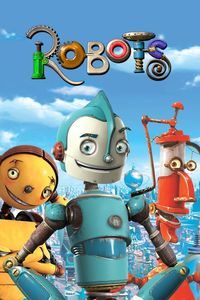
    (In theaters, March 2005) It’s hard to be overly critical of this type of film. Sure, it’s no masterpiece –heck, it’s nowhere near the level of quality of Pixar’s CGI animated films. Plot-wise, it’s a Saturday-morning cartoon special: Young robot goes to the city, makes friends and enemies, saves the day. Robots may feature an all-robots cast, but it’s straight-up comedy rather than Science Fiction. But you don’t need to be flawless to be entertaining, and so few will fail to be amused by Robots: The level of wordplay and visual invention alone is worth a look, what with its joke-every-five-seconds pacing. It’s not high-level humour (Farts and big body parts: Comedic gold!), but there is an awful lot of it, and at least some of the gags are bound to amuse you. As with other recent CGI films (Monsters, Inc., for one), the elaborate animation allows for a few frantic action pieces and some amazing depth to the film’s imagined world. Tons of stunt voice casting may make for an impressive credit sequence, but they don’t do much to raise the interest in the characters –at the exception of Robin William’s usually hyperactive delivery. It all amounts to a quirky comedy that’s just too likable to kick too hard. It’ll do for kids, and it’ll do for adults too.

  • Assemblers of Infinity, Kevin J. Anderson & Doug Beason

    Bantam Spectra, 1993, 278 pages, C$20.00 hc, ISBN 0-553-29921-2

    The gradual endangerment of the Science Fiction mid-list over the past decade and a half has already been discussed to death elsewhere, but that doesn’t make it any less important. The conglomeration of publishing under ever-hungrier multinationals has increased the drive for clear profits. Authors who used to sell profitably but not spectacularly have been driven away in the hope of finding strings of best-sellers. This, in turn, has affected what gets into bookstores. Authors are encouraged to do series, to do novelizations, to “co-write” something with a celebrity.

    Unfortunately, what has gotten lost in this evolution is what I call the meat-and-potatoes genre novel. The kind of adequate, but unspectacular standalone book that entertains despite not breaking any genre convention. Novels like Kevin J. Anderson and Doug Beason’s Assemblers of Infinity.

    The story is one we’ve seen many times before: Twenty-five years in the future, astronauts on the moon discover a strange alien artifact that is both intriguing and dangerous. People die, scientists are sent to investigate and soon enough, we’re stuck in a race against time, between revelation and annihilation. Simple enough: that Anderson and Beason choose to exploit nanotechnology as the Danger Tech is a sign of the times, but otherwise there isn’t much that’s not instantly recognizable by SF fans.

    Not that this is a bad thing: From the opening prologue, in which a discovery turns deadly, fans will slip into Assemblers of Infinity like in an old set of clothes. The technology-heavy vocabulary is familiar. The easy prose is unobtrusive and compulsively readable. The characters are engineers and scientists, bright folks with just enough back-story to avoid charges of cardboard characterization. In short, it’s a perfectly lovely hard-SF story in the Clarke mold, with enough ambiguity to make it interesting: the characters don’t neatly divide in good/bad bins, and that’s already nice enough. In retrospect, few fans will be surprised by the twists and turns taken by Assemblers of Infinity, though there are a number of pleasant developments here and there (much like the authors’ previous Lifeline, which tweaked a few genre conventions by the nose). The somewhat gratuitous suggestion of ESP power is old-fashioned, but not in an intolerable way: Everything ends up fitting together nicely.

    Assemblers of Infinity is not meant to be innovative, but comforting. Working away from genre spotlights, the Anderson/Beason team has produced more than half a dozen interesting Hard-SF/techno-thrillers that are well-worth a quick read. Comfort food for the SF audience, meat-and-potatoes novels that are fulfilling but hardly spectacular. And that’s fine, because those mid-pack novels are the true backbone of the genre, the structural blocks that define what people imagine when they think about SF. The genre classics stand out over the background noise that is generated by novels such as this one. Without a strong fuzzy stream of good solid SF novels, there isn’t much of a genre. Assemblers of Infinity may be a middle-of-the-pack book, but there’s no dishonour in that.

    Ultimately, this thought brings us back to why the much-heralded “death of the mid-list” hurts the genre. Without a support net of mid-list building blocks, SF is stuck without references, without a way to keep readers from abandoning the genre while waiting for the next Big Thing.

    So authors adapt and evolve. Like Kevin J. Anderson, they start massive trilogies and series. They turn to comic-book writing. They shill themselves to cults and celebrities. They write novelizations. They try other genres in the hope that they’ll find a magic formula. But most of all, they stop writing those mid-list novels that define the genre. Assemblers of Infinity may not be publishable today (The Anderson/Beason team has certainly stopped writing anything like it), and that’s a real shame.

  • The Quick And The Dead (1995)

    The Quick And The Dead (1995)

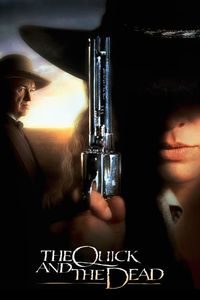
    (On DVD, March 2005) The Western genre has rarely been faithful to the historical reality of the American west, opting for operatic grandeur and machismo myth-making over the true grime and uneventful routine of the era. This film cheerfully won’t do anything to correct the record: here, the wild west is only a backdrop to a series of shoot-em-up duels, aggrandized by ridiculously overblown personalities and heightened visuals. I say this like it’s a bad thing, but it really isn’t: The Quick And The Dead is most enjoyable when it goes for broke in its quest for the ultra-Western, and at its weakest when it tries to inject realism (or its boring cousin, “motivation”) into a framework that doesn’t need it. As a tongue-in-cheek take on the pistol-duel shtick, it’s hugely enjoyable. Too bad that it chose to saddle itself with a clogging revenge story, complete with lengthy flashback and barely-repressed rage. But that takes maybe ten minutes, and the rest of the film is a lot of fun: The impressive cast is awe-inducing even today: Gene Hackman has rarely been better at chewing scenery, and any film that managed to snag both pre-stardom Leonardo Decaprio and Russell Crowe is nothing to dismiss easily. Sharon Stone herself has lost a lot of starpower in the decade since this film (and her middling screen presence here may show why), but she looks cute enough as a female gunfighter. The fifth cast member worth noticing is director Sam Raimi, who infuses the film with some much-needed style. Realistic? Absolutely not. As tight as it could be? Heck no. Fun to watch despite everything? Oh yes.

  • How To Lose A Guy In 10 Days (2003)

    How To Lose A Guy In 10 Days (2003)

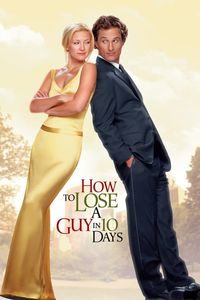
    (On DVD, March 2005) Fluffy, slightly original romantic comedy that shows promise but then devolves in the usual yadda-yadda. There’s interest in the basic premise (dual bets: she has to break up; he has to stay with her; hijinks ensue) but once it’s properly presented, it’s immediately discarded in favour of the usual idiot characters, dumb misunderstandings and wacky chase sequences. The whole film is contrived, but the last quarter hour overdoes things in this regard. It’s still not an entire waste of time mostly because of the charm of the two leads: Kate Hudson is even pretty cute in her “Kathie Lee Gifford on crack” mode. Matthew McConaughey is blander (in keeping with Romantic Comedy male lead tradition) but not entirely boring. It all amounts to a fair film, slightly too long but still pleasant enough.

  • Hostage (2005)

    Hostage (2005)

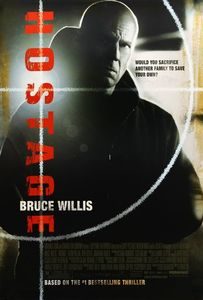
    (In theaters, March 2005) There isn’t much that is remarkable in this Bruce Willis film, if not for the fact that it brings to mind about half a dozen similarly unremarkable films in Willis’ career. Bland villains, by-the-number developments, pedestrian directing, somber cinematography: Without the big-name headliner, this could have been a straight-to-video release and few would have noticed. The gritty cinematography is annoying, but not as much as the lack of involvement with the characters. Daddy is a mob accountant and the bad people are teenage hoodlums: why is it difficult to care about these people? Even Willis is more of an enigma than a hero. Oh, there are a few quirks here and there, but almost nothing here comes to the level of The Negotiator, to name another relatively recent hostage-rescue drama. Made to fill the shelves of your local video-club, this film acceptably competent, but just that and no more.

  • Crush Depth, Joe Buff

    Morrow, 2002, 449 pages, C$37.95 hc, ISBN 0-06-000964-0

    By now, Joe Buff fans should know what to expect from his third novel. Cutting-edge near-future submarine warfare. Shaky grasp of story-telling techniques. An absence of political complexity. A story that emerges out of the water mid-way through, to conclude with yet another duel between submarines. At least Joe Buff is getting better with every following book, though Crush Depth doesn’t show the same stark improvement that set Thunder in the Deep apart from the debut Deep Sound Channel. In fact, it’s such a small improvement that some readers may come to question why they’re reading the entire series.

    For it is obviously a series, and there’s no hope that it will conclude anytime soon. Buff is slated to write nearly a dozen novels in the “Jeffrey Fuller” universe, each one describing a campaign in a fictional near-future war opposing English-speaking Allies to a new Germany-led Axis. In this third book, captain Jan ter Horst and XO Gunther van Gelder both return from the first novel, while our stalwart hero Jeffrey Fuller must once again go head-to-head against enemies that are as smart as he is. Plot-wise, that’s all you need to know: You can infer the structure of the novel from Buff’s previous ones: There will be a submarine fight, a terrestrial raid and another submarine fight. One wonders if all twelve Fuller books will suffer from the same structure.

    What’s new here is a land-bound prologue in which Fuller and series love interest Ilse Reebeck tour a wartime New York city. Unfortunately, this segment only highlights how Buff’s political sense comes nowhere near his expertise in military affairs. What becomes obvious is that Buff is merely using his future history to re-fight “The Good War”: Wartime New York suffers from rationing and plays big-band music as if it had escaped from a romantic WW2 film, whereas the big bad Germans are only one snappy salute short of being total Nazis. Given the pacifist learnings of real-world Germany, let’s just say that a German civil war is more likely than them presenting a credible challenge to the Anglo-speaking power bloc. Buff constantly tries to hand-wave “nuclear weapons!” as the big equalizer, but that excuse doesn’t excuse much given, once again, the anti-nuclear forces at work within Germany these days. (Don’t try to make me believe that massive executions would resolve that problem.)

    The political unlikeliness at the root of Buff’s future history have always been problematic, but it becomes even more so as the series advance and Crush Depth, for instance, suggests an escalation of warfare from countries lining up against the US. Now, I would pay good money for a military thriller in which the US was the antagonist that a righteous alliance of nations would try to contain (heck, we’re already half-way there today), but somehow I don’t think that this is what Buff has in mind. (Wouldn’t it be a fantastic twist, though?) Oh well, onward, what with tactical nuclear weapons raining down on our protagonists like so many cheap fireworks.

    Buff’s strength has been in portraying submarine warfare as a complex interrelationship between psychological, military, oceanographic and technological factors. While the degree of innovation is smaller in Crush Depth than in the series’s previous two volumes, there are still a number of good ideas and scenes here and there. Particularly noteworthy is a third act taking place under the Antarctic Ross Ice Shelf, though the final conclusion seems weak after all the build-up leading to it.

    In terms of story-telling, Buff is still improving, though he still has a way to go before delivering a novel that can be enjoyed by laypersons: There are a number of hilariously unconvincing dramatic blunders in Crush Depth, including the clumsy introduction of Fuller’s father (“I haven’t thought about my father in months because I don’t like him… wait… who’s that man at the urinal? It’s my father!”) and a fake death that just isn’t unconvincing (no one will buy in it), but doesn’t even make sense in the internal logic of the series.

    Given that even this type of stuff represents an improvement over the previous novels, you can see why I’m sceptical as to whether I’ll ever truly enjoy one of Buff’s novels. I happened to have the first three books on my shelves, but now that I’m done with them, it’ll be a challenge to convince myself to pick up the follow-up Tidal Rip. Maybe at a used book sale. Provided it’s really, really cheap.

  • Elf (2003)

    Elf (2003)

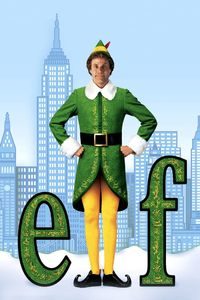
    (On DVD, March 2005) There are two movies warring for attention here: An innocent kid’s film about the meaning of Christmas through the antics of an elf lost in New York, and a silly comedy that has to please the adult fans of Will Ferrell. No surprise, then, if the film gives out such a mixed impression. Parts of it work, but they come from different films. Ferrell is sweetness incarnate as the Elf lost in New York, but Elf is equal part amusement and embarrassment as he’s confronted with the very grown-up streets of New York City. The romance and the last-act thriller may have worked in other contexts, but here they just feel forced and badly integrated to a kid’s film. Not entirely pleasant to watch nor particularly funny, Elf exists in a demimonde of conflicting goals. Only Ferrell’s compelling performance saves it from complete disinterest.

  • De-Lovely (2004)

    De-Lovely (2004)

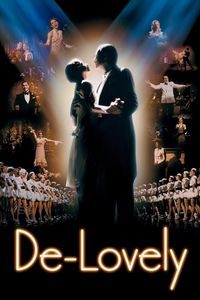
    (On DVD, March 2005) I’ve never been able to let bad wordplay stand in the way of a nuanced review, and so I can’t help but write: De-Lovely is De-Boring. Granted, I know next to nothing about Cole Porter, but it’s not this tepid musical biography that will make me rush to know more. Granted, I did like some of the staging and the way some numbers were integrated into the overall story. But then the music starts and I can’t muster much enthusiasm for the types of show tunes Porter was known for. The framing device can’t do much to counter-act the increasingly wearying impact of the film, which runs about half an hour too long and gets less and less interesting as Porter’s life goes by. (“Just die already!” becomes the rallying cry in my living room) I suppose that devotees of musicals will get a kick out of it; as for myself, this movie just can’t make me care. Which is ironic because when you take a look at all the good material that’s stuffed in this film, you’d expect much better.

  • Dawn Of The Dead (2004)

    Dawn Of The Dead (2004)

    (On DVD, March 2005) Now that’s how you make a zombie film. Re-inventing absolutely nothing and taking no ironic distance to its material, this entry in the undead sub-genre nevertheless manages to deliver the requisite amount of bloodshed, action and grim humour that is required of such movies. Director Zack Snyder knows what he’s doing, moves the story along at a decent clip and does surprising things with an average script by James Gunn. While there are numerous wasted opportunities (the satiric bite of the original film, for instance, has been completely eradicated), too many annoying characters and only occasional flashes of wit, Dawn Of The Dead at least fulfils the basic requirements of zombie film. “Shoot’em in the head” has seldom been more graphic than its depiction here. Stay during the credits for the full story. The DVD includes many, many extra features.

  • Something Rotten, Jasper Fforde

    Hodder & Stoughton, 2004, 393 pages, C$24.95 tpb, ISBN 0-340-83827-2

    There’s something rotten in the state of England. Fortunately, Thursday Next is back on the case, two years after the events of The Well of Lost Plots. As Something Rotten begins, the twin pressures of Jurisfiction leadership and homesickness are getting to her: After a problem in a genre Western is solved in an entirely unsatisfactory fashion, she decides to get out of the Bookworld, come back to Swinton and finally get her eradicated husband back.

    This fourth book in the Thursday Next series is meant to be a conclusion of sorts to the series, and so a whole bunch of errant plot threads are tied back together one after another in the madcap fashion by now so familiar to Fforde fans. Something Rotten reaches back all the way to The Eyre Affair and Lost in a Good Book for references and in-jokes, successfully concluding the series. (Maybe.)

    This being said, there’s enough new material here to keep everyone interested. Next doesn’t come back alone from the Bookworld. For one thing, her infant son (Friday Next, of course) comes back with her, giving rise to all sorts of complicated situations of which finding day care is the least difficult. For another, she’s shepherding Hamlet as he visits the real world to assess his own reputation. This wouldn’t be a Fforde novel without tons of subplots, so you can also expect Thursday Next to confront assassins, coach a cricket team, save the world, team up with agent Spike for another supernatural adventure, get news from her deceased time-travelling father, deal with Neanderthals, find cloned Shakespeares, deal with the Goliath corporation and fight the evil Yorrick Kaine. Whew!

    Given the depth and complexity of Fforde’s imagined universe as developed over the first three books, I can’t imagine how a new reader would react at the sight of all this stuff. But for faithful fans of the series, Something Rotten is pure gold. Fforde doesn’t necessarily preclude further volumes in the series (you can even see hooks for something called The Great Samuel Pepys Fiasco buried into the plot-line of the novel), but we should be grateful that he’s willing to bow out in style. After setting most of The Well of Lost Plots in the fictional Bookworld, Fforde wisely re-sets Something Rotten to take place almost entirely is Next’s “Real World”. It gains in plausibility, but loses in invention. While it would be an exaggeration to say that the world of Thursday Next has gotten boring, it’s true that it doesn’t offer as much that’s completely new.

    Still, Swinton is a pleasant place to visit, and the fevered pace of Fforde’s invention is almost as manic as in the previous books. What’s more, it even finds a very dramatic ending that deftly balances real emotion and amusing slapstick. Also included is gentle political satire (as Denmark is designated as the root of all evil as part of a dastardly plan by Yorrick Kaine), the usual typographical finds (here, a historical figure speaking in Gothic fonts) and two or three revelations about the characters’ future. All told, Something Rotten is just as readable, just as enjoyable and just as amusing as the first three books of the series, giving form to a quartet that’s well worth recommending to every ardent reader on your Christmas list.

    With this, a natural end to the Thursday Next series, Fforde and ffans find themselves at a branching point: The author surely has some other universes to create, but it remains to be seen whether he’ll allow his readers to box him into a narrow series of books that is perhaps best left complete. We’ll see: His next book, The Big Over Easy, is supposed to be a stand-alone book. Better a singleton than overcooking a series which, at this time, seems to have reached its potential.

  • City Of Angels (1998)

    City Of Angels (1998)

    (On DVD, March 2005) It would be too easy to dismiss City Of Angels as romantic clap-trap about angels, impossible fairytale romance and cheap existential questions. It would be even easier to dismiss the film as a slow-moving morass of fabricated sentiment with an unclear mythology and a script that couldn’t be more obvious if it included subtitles about the screenwriter’s intentions. But to do so would be to ignore, unfairly, the delicious frisson of wonder at some of the film’s visuals: The “angels” watching over Los Angeles like so many dark crows. The idea that angels hang out at libraries (oh, c’mon; even stone-cold atheists would like this one to be true). The handful of scenes that make you go “hey… that’s nice.” Dennis Franz’s performance as a fallen angel who has learnt to appreciate life. Granted, in order to get to these things you have to suffer through love scenes between Meg Ryan and Nicolas Cage. (Ergh.) And possibly fast-forward through chunks of the film. And certainly try not to giggle at the splat-ending, or the contrived death scenes. But even cynics may find two or three things worth keeping about this film, and that’s almost two or three more than they would expect.

  • Beauty Shop (2005)

    Beauty Shop (2005)

    (In theaters, March 2005) This second spin-off of the surprise hit Barbershop dilutes the formula so much and treats it with such contempt that you’ll have a hard time seeing it as anything better than a fluffy comedy. Queen Latifah is often irritating as a protagonist who doubles as the film’s most racist character (seriously, why bring the “coloured” word in discussions that have nothing to do with it?). The supporting characters aren’t much better as the whole range of black stereotypes are exploited without a moment’s worth of self-reflexion. Heck, the entire female gender is exploited without a moment’s self-reflexion: It may be nice and all to see bootyology elevated to a science, but curvy actresses aren’t much of a relief when the script they have is so bad. It’s not just the bad jokes as much as the lame plot, the awful coincidences and the dumb characters. Suuure, the annoying vid-kid just happens to catch a payoff between the antagonist and the city inspector (both white). Suuure, the beauty shop just happens to be underneath an electrician’s apartment, an electrician who just happens to be handsome, single, artistic and non-threatening. Suuure, the client who walks though the door in a panic just happens to be a famous radio DJ. Such plot cheats are unforgivable, and it’s not just a white/black, male/female thing: Dumb is dumb, lazy is lazy and even my panting fascination for Andie McDowell has its limits.

  • Call of the Mall, Paco Underhill

    Simon & Schuster, 2004, 227 pages, C$37.10 hc, ISBN 0-7432-3591-6

    After explaining Why We Buy, retail naturalist Paco Underhill sets his sights on shopping malls in Call of the Mall, his second book on the nature of today’s shopping environment. Focused and dramatized through fictive conversations with fellow mall-goers, this follow-up on “the science of shopping” is both a retread and an improvement on the previous book.

    Successfully structured as “a day in the mall with Paco Underhill”, Call of the Mall examines the modern institution known as the shopping mall from a variety of aspects, from retail to architecture, security to wilful inaccessibility. In doing so, Underhill shows what’s wrong with malls and why they’re doomed to failure. But don’t take this book for what it’s not: Neither scientific textbook nor anti-capitalistic screed, Call of the Mall is just as focused as Why We Buy on improving the performance of stores, sometimes at the shoppers’ expense and sometimes not.

    To give you an idea of how Underhill approaches his subject, consider that he doesn’t take us inside a mall until Chapter 5: In the meantime, he discusses what malls are (a real estate business more than a retail one: mall owners make their money renting space to stores, not selling products), where they’re built (far away from anything else, to keep customers inside as long as possible), how they’re built (not very esthetically) and the whole problematic of finding a parking space. Underhill clearly knows malls: His day job, after all, is to study shopper’s habits, spending hours and hours “in the field”, shadowing shoppers as they normally behave in retail environments. So when he discusses his own emotional attachment to malls, he knows what he’s talking about.

    It helps that his writing style is readable like few others. It’s all too easy to be taken with Underhill as he invites us to spend a day at the mall with him. It doesn’t take much to imagine this as a documentary film, as he dramatizes shopping situations with typical customers or invites us to see a food court through his well-trained eyes. Call of the Mall is unpretentious, sometimes superficial, but seldom boring.

    At most it can be repetitive, especially if you’re already familiar with his previous Why We Buy: Underhill, after all, has spent his professional career establishing his consulting firm and building his own theories of shopping: If he sticks to the same ideas from one book to another, it’s not dogmatism as much as it’s professional experience. While his tendency to systematize experience can be exasperating, they’re generally on-target: The way he describes male shoppers in malls isn’t quite a perfect match for me, but it’s close enough to make me trust his descriptions of other demographic groups.

    But beyond the easy entertainment value of the book lies a series of insights in the world of malls and how they work. If you have ever wondered about food courts, mall toilets, pushcarts, the disappearance of bookstores from suburban malls (hint; it’s not because people don’t read, it’s because people browse more than they buy, especially where they’re waiting for other people), why similar stores are located in clusters or secret entrances to malls, don’t worry: Underhill has studied these things and now he’s ready to tell all about them.

    Ironically, Underhill concludes his book by saying that malls are past their heydays. Their “lack of mercantile DNA” [P.202] will prove fatal: Built away from transit routes, slapped together without regard to architecture or communities, those self-sufficient island of shopping are not going to find any supporters when they start falling down (often literally, as they reach their thirtieth or fortieth year). What’s the next step, then? “Big boxes” retailers, on-line shopping or a return to shopping districts? Maybe we’ll have to wait until Underhill’s next book to find out.

    Fascinating conclusion, but I couldn’t read the book without tying it to the malls I know and it seems to me as if the Ottawa-area malls have at least a fighting chance. For one thing, they’re all built near transit routes (my own morning bus ride takes me through or near four malls) and often act as transit for people going from one place to another. For another, they’re covered and heated: When you’re dealing with Canadian winters, that’s not an inconsequential factor.

  • Why We Buy, Paco Underhill

    Simon & Schuster, 1999, 256 pages, C$37.00 hc, ISBN 0-684-84913-5

    The next time you’re out shopping, pay attention: someone may be looking at you. No, I’m not talking about security cameras or other shoppers checking you out (though, hey, enjoy the attention if you can get it). I’m talking about people like Paco Underhill, shopping scientists studying the habits and behaviour of ordinary consumers in a retail environment. Perhaps more accurately called “retail naturalists” than “shopping scientists”, Underhill and members of his consulting firm Envirosell spend hundreds of hours per year following shoppers, analyzing store layouts, looking at store signs and trying to improve the shopping experience.

    Why We Buy is Underhill’s first book, and it brings together several of Underhill’s painstakingly-developed theories about the modern state of shopping. At a time where North-American shopping has nowhere to go (ie; no fast population growth, no rapidly increasing income levels), the only alternative is to sell more efficiently. That’s where consultants like Underhill come in: by studying the way we shop, they can identify problems and fix what’s clearly not working.

    One easy example: The “landing strip”. You can’t just walk inside a store and start shopping: You need time and space to adjust, remove your sunglasses or your toque (depending on the season), take stock of the store’s layout or pick up a shopping cart. Clever managers won’t try to put merchandising inside the “landing strip”, but will exploit the area in more subtle ways.

    Another easy example: The “butt-brush” aversion. North American simply don’t like being touched (even accidentally) when they’re bending down. Trying to make them bend in confined spaces, where closely-arranged shelves only allow for a limited amount of space, is an exercise in futility. Solution: more space, and re-arrange merchandise so that people who can’t bend (older people, for instance) won’t have to.

    Both of these things may sound like common sense, but at a time when increasingly chain-driven shopping is being managed from corporate headquarters, retail operations can need a reality-check. The drive to rationalize operations by using fewer clerks, minimal wages, more crowded shelving can actually decrease sales rather than improve operations. In a competitive industry where even tiny adjustments can make the differences between black and red ink, Envirosell’s advice clearly finds a market.

    This type of information is a boon to retailers (one can imagine a conscientious store manager reading this book and making significant changes to his store), but it’s just as interesting to the consumer cattle being studied. It’s impossible to read even two pages of Why we Buy without a sigh of acknowledgement as Underhill explains how the retail industry works, or at least ought to work. But be forewarned; Underhill comes to the store to improve it, not to destroy it: His lucrative perspective isn’t one of a consumer muckraker, but a merchant optimizer. While the two often coincide (a happier shopper is a bigger spender), you will not find in Why We Buy a critique of consumerism or a scathing exposé of modern marketing techniques. Lavish consumerism is seen as a desirable objective to attain, and Underhill spears nearly all of his time suggesting ways to improve the spending experience.

    The other problem with Why We Buy is that Underhill has so much experience in stalking the habits of the wild shoppers in retail environments that his perspective is limited is areas other than his own. His “suggestions” for bookstores will be greeted with aghast stares by book-lovers, while his own open contempt for the “cyberjockeys” driving on-line shopping betrays both ignorance and shortsightedness.

    Still, for shoppers both enthusiastic and reluctant, Why We Buy is a compulsively readable, highly informative book. Deliciously written and stuffed with telling examples, it’s a way to deconstruct the shopping experience and understand our behaviour. (I thought Underhill was indulging in gratuitous stereotypes as he was describing female shoppers… until he started describing the habits of male shoppers, which are pretty much spot-on identical to mine.) It may be a book solely about how more dollars can be squeezed out of our wallets, but that doesn’t make it any less fun.