Month: October 2021

  • The Cincinnati Kid (1965)

    The Cincinnati Kid (1965)

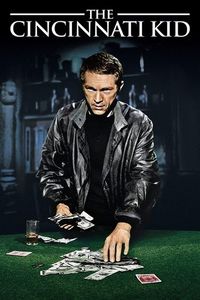
    (On Cable TV, October 2021) My disadvantage in watching poker movies is that (and hush, because this passes for a dishonourable secret), I don’t really understand poker. Not being a gambler nor having any poker-playing friends to entertain, I get the basics of the game and some of the better hands, but don’t ask me to explain the finer details of the game. And yet, the paradox is that I generally like poker movies: you don’t have to know exact odds to be fascinated by bluffs and high stakes. It helps that The Cincinnati Kid has plenty to offer even to non-poker players: Steve MacQueen in fine roguish form as a hotshot player about to rub shoulders with the best; Ann-Margret as a seducer; Edward G. Robinson in a great late-career performance as a notorious card shark; a rather convincing portrayal of New Orleans’ atmosphere. The period detail is interesting as well, but it quickly fades into the background once the cards are dealt and we’re back with the timeless high stakes of romance, cheating, deception and showmanship. Classic Hollywood legend Joan Blondell shows up in a small but memorable role, while director Norman Jewison marks this film as the one that broke him out of light comedies into the unpredictable blend of genres that marked the rest of his career. The similarities with the near-contemporary The Hustler are numerous, but despite knowing a lot more about pool than poker, I like The Cincinnati Kid best: the colourful cinematography is more appealing, MacQueen outdoes Newman in this specific case, and the ending seems gutsier and more meaningful as well. While not as compelling or steadily entertaining as other similar films, The Cincinnati Kid has nonetheless aged rather well, and remains accessible even to those who can’t quite distinguish their flushes from their suits.

  • Enemy Mine (1985)

    Enemy Mine (1985)

    (Second Viewing, October 2021) I’m not sure I can plausibly claim to have seen Enemy Mine before—it’s familiar enough (even if I discount having read Barry Longyear’s original short story) that I must have seen at least bits and pieces of it in the early 1990s, but most of the film felt new enough. What’s perhaps most remarkable about it (and can be traced back straight to its literary origin) is how much of the film plays as an intimate drama between sworn enemy warriors (a human and an alien) stuck together on an inhospitable planet, learning to trust each other and eventually having one care for the child of the other. That’s unusually mature material for 1980s Science Fiction films, and despite this leading to a deliberately slow-paced film, it does present something that hasn’t often been attempted in the framework of a military SF film. Having director Wolfgang Petersen does much to ground the film in realism despite now-quaint special effects (although used more effectively than many films of the time). Of course, this admiration has its limits: Enemy Mine’s third act is an abrupt return to familiar bellicose clichés, tried formula and sappy moments. Most sources are clear on this being due to studio interference—never quite trusting the audience to be satisfied by maturity, they had to go for a conventional conclusion. I’m not going to argue that Enemy Mine is a great movie even if you lop off the third act: the dialogue can be blunt to the point of embarrassment, and the production values now feel too creaky to be enjoyed as nothing but an approximation of realism. But, even with the slow pacing taken into account, Enemy Mine does try, at least for an hour or so, to do something unusual for the time and still too rare today. It’s an admirable paean to peace and understanding between different races, and a somewhat atypical SF film even now. At least if you lop off that last act.

  • Police Academy 3: Back in Training (1986)

    Police Academy 3: Back in Training (1986)

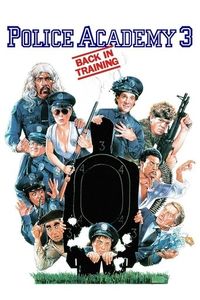
    (Second or Third Viewing, October 2021) I’ll avoid expounding again how I once thought the Police Academy movies were the funniest thing ever as a 12-year-old — time moves on, and I finally get why it has received such bad reviews ever since its release. But at least this third instalment, featuring a “back to school” scenario for many of the characters being asked to help train another batch of recruits, is a step above the terrible second film. Oh, Police Academy 3: Back in Training has its problems: The jokes often scrape the bottom of the comedy barrel, there are far too many characters to do them justice, and the script is often laborious in how it sets up the jokes long enough to see them coming. But its anarchy can work in its favour: if you’re not happy with a character and their associated humour, just wait and there will be something else twenty seconds later. There’s also the fun of seeing mid-1980s Toronto being used very obviously (in a pre-CGI age) as a film backdrop—the skyline, TD bank, Younge Street address and Toronto Sun newspaper boxes being part of your “Toronto references” bingo card. I chuckled a few times (sometimes out of nothing but recognition at moments long forgotten) at Police Academy 3: Back in Training and that’s about all I could hope from a film that never aimed high to begin with.

  • That’s Right—You’re Wrong (1939)

    That’s Right—You’re Wrong (1939)

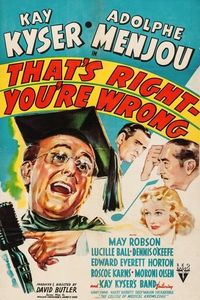
    (On Cable TV, October 2021) It’s amusing that TCM presented That’s Right— You’re Wrong as part of a Lucille Ball retrospective, because once the film begins, it quickly becomes obvious that this is a Kay Kyser vehicle with a little bit of Ball as a (very) supporting character. Not that I minded—In the extended pantheon of ephemeral Hollywood stars, Kyser was an unusual figure and an unlikely movie idol. Soft-spoken, not particularly attractive nor that good of an actor, he nonetheless starred in more than half a dozen pictures, usually (but not always) playing himself as the leader of the Kollege of Musical Knowledge, a music-themed radio game show. As the first film to translate Kyser’s radio popularity to the big screen, That’s Right— You’re Wrong begins and ends with a re-creation of the game show in front of a live audience. In-between, we get Kyser and his bandmates having adventures in Hollywood as a studio tries to tailor a film for them, and the wackiness of the environment transforms them into parodies of themselves. I had quite a bit of fun watching it, but keep in mind that I’ve been something of a Kyser fan for a while: Ever since wondering how he became the star of Swing Fever, I’ve seen six out of his nine feature-length films. (It probably says it all that I don’t only recognize Kyser on sight, but also bandmates such as the lovely Ginny Smith and the deadpan Ish Kabibble.) Despite his underwhelming acting talent (something openly lampooned in a very funny “screen test” sequence), Kyser does have a very likable presence, and he’s never more at ease on the big screen as when he’s playing himself as the professorial host of the Kollege of Musical Knowledge (albeit spelled with a C), having fun with the guests and spouting his catchphrases. (It’s actually fun for a twenty-first century viewer to try to follow along, so obscure are now some of the references.)  The rest of That’s Right— You’re Wrong is hit-and-miss—it works as a Hollywood satire, as Kyser fights against a studio executive played by Adolphe Menjou, but it’s far too often a vehicle that’s more interested in showcasing Kyser in a format familiar to then-viewers of his show. It’s rather wonderful that two of his “shows” are captured that way, even if the action stops dead during that time. For those unfamiliar with Kyser, this is a great introduction to the character and why he attracted Hollywood’s attention as a celebrity DJ bandleader. The comedy is amusing enough to entertain (Ball’s finest moment is in the aforementioned “screen test” sequence), although I suspect that you have to like Kyser’s very unusual charm to fully appreciate That’s Right— You’re Wrong.

  • Fatale (2020)

    Fatale (2020)

    (On Cable TV, October 2021) There are strong elements of neo-noir in Fatale, and it’s a shame that the film didn’t commit to them. It does start out as something else—if you’ve seen the trailer, it momentarily looks as if this is going to be the story of a family man who gets to experience the consequences of his spur-of-the-moment affair when the police officer investigating a break-in turns out to be his one-night stand. So far so dull—there have been plenty of thrillers before or since Fatal Attraction about the price to pay for infidelity. But as it quickly becomes obvious, Fatale does have other things in mind, as the wife’s character is certainly not innocent, as the bodies pile up, and as the protagonist becomes embroiled in a desperate situation. Before long, there’s talk of trading murders, taking aim at an influential politician, friends of the protagonist failing at a dangerous task, and even more elements of a fatalistic noir where everyone is guilty and there’s no issue. Alas—Fatale doesn’t have the guts to pull through: the ending once again goes back to familiar, toothless tropes. It’s not a bad watch—there’s a rather good succession of moments midway through where the film jumps from adultery thriller to something with more ambition, and has done the groundwork to keep viewers guessing. Michael Ealy is fine as the protagonist, but it’s Hilary Swank who earns the most attention as a deeply disturbed police officer who’s both able to inflict pain in her role, but also has to contend with an even more powerful opponent. I’m not sure Fatale successfully walks back from the abyss of noir darkness—by the end, everyone is compromised and the upbeat ending feels false. Still, it’s not terrible entertainment for a contemporary thriller, and it certainly beats another soulless CGI spectacle.

  • It’s the Great Pumpkin, Charlie Brown (1966)

    It’s the Great Pumpkin, Charlie Brown (1966)

    (On TV, October 2021) It’s a good thing that It’s the Great Pumpkin, Charlie Brown has a considerable amount of good-natured nostalgic charm because, by modern animation standards, it is rough. Sure, it was made for TV at a time where colour was something new—but its cheapness would be unacceptable these days as a new production, and it does distract from the rest of the film. Even in its dialogues and overall scripting, this is often a slapdash affair—the tone is not always obvious (or consistent) and we’ve grown used to much smoother writing. Still, and this is the aspect that can’t be ignored, there’s an earnestness here that stems directly from Charles Schulz’s source material—kids being kids in their down-to-earth way, albeit with flights of fancy (literally, considering that there’s quite a bit about Snoopy imagining himself dogfighting against the Red Baron) and some pointed humanist moments. That’s the part that hasn’t aged as badly, and one that pulls viewers beyond direct nostalgia. Still, compared to that other Peanuts Christmas classic, It’s the Great Pumpkin, Charlie Brown feels like something that’s progressively losing its appeal by the decade. I wonder if it will ever be remade: Keep the audio, just redo the animation based on the keyframes.

  • Abismos de pasión [Wuthering Heights] (1954)

    Abismos de pasión [Wuthering Heights] (1954)

    (With French Subtitles, On TV, October 2021) I got interested in Abismos de pasión because it’s directed by Luis Buñuel, but there’s a lot of fine print to read in his bibliography—it’s not all surrealism and wild concepts, and his mid-1950s Mexican phase is far more conventional than most of his other work. Still, conventional isn’t necessarily boring, and so Abismos de pasión ends up being a Mexican retelling of Emily Brontë’s classic Wuthering Heights, transplanted in a countryside much unlike the rural English estates of the original. Then there’s the execution, because when Buñuel decides to go for melodrama, he truly commits to it—the performances are emotionally heightened to an almost parodic degree, and the in-your-face score practically becomes a character in itself, telling the viewers not just how to feel, but giving them permission to go all-out on the love, the tears and the indignation. Despite a relative paucity of plotting, Abismos de pasión is a wild ride in barely 90 minutes, all the way to the overwrought shotgun finale. This is clearly nowhere near the top of my favourite Buñuel films, nor is it anywhere near most critics’ assessments of his work, but it does have a few things going for it.

  • Framed (1990)

    Framed (1990)

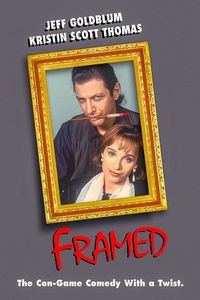
    (In French, On Cable TV, October 2021) There’s an amiable nature to Framed that makes it hard to dislike even if it’s not that great a thriller. A made-for-HBO comic suspense set against the underworld of art forgery, it’s a film that has Jeff Goldblum as a master forger, but one who ends up in prison after possibly being betrayed by his girlfriend, and who gets sucked back into the racket upon being released from prison. Kristin Scott Thomas is often cute as the potentially traitorous girlfriend (a rather rare comic role), while some colourful supporting characters quickly make the protagonist understand that he’s stuck between mobsters, businessmen, police officers and other shady characters. The ex-girlfriend has another score in mind, the FBI wants evidence to lock up the girlfriend and the mobster wants to marry the girlfriend. Anyone would walk away, but there are, naturally, a few complications. Framed decides to go soft on the laughs—there are a few funny sequences (specifically during the wedding), but the film generally underplays the comedy. The result is a more subtle tone than usual, but one where it’s easy to miss the chuckles if you’re not paying attention. The effect of such a soft-pedalled approach is that the film often feels as if it’s not reaching its full potential. The eccentric characters seem held back from being truly funny, and even the comic situations are handled with restraint. It’s not necessarily a bad choice, as the result does often feel more respectable than a broader film would have been. But it does make Framed a rather discreet film—fit to fill an evening’s entertainment, but not necessarily convince viewers to tell others.

  • Skyfire (2019)

    Skyfire (2019)

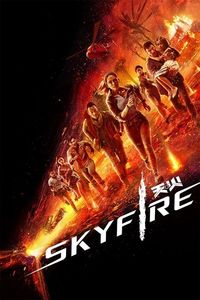
    (On Cable TV, October 2021) Cynical observers will comment that, true to the way they’re behaving in other industries, China has spent decades studying, buying and appropriating everything they could find about blockbuster filmmaking before making their own. In Skyfire, we see the Chinese film industry turning to disaster films as their next target, even going to the trouble of hiring a western has-been director of the form (Simon West, long past his Con Air/Lara Croft glory days) and a western actor (Jason Isaacs) to anchor a cast and crew otherwise studded with Chinese names. The disaster being showcased is nothing less than an island volcano, around which a state-of-the-art hotel/thrill ride has been built for sensation seekers. What would, in the real world, be recognized as the worst idea anyone has ever had is here turned into a justification for a time-tested amount of mayhem, special effects, action sequences and dramatic sacrifices, as the volcano wakes up at the most inopportune time and starts spewing more lava than an apoplectic film critic. Skyfire is not too bad by the standards of the form—West is hampered by the typical histrionics and corner-cutting of Chinese blockbuster filmmaking (as in: the special effects are good enough to get the point across, but not good enough to be fully believable, while the melodrama is cranked up to an almost-laughable extent) but it has been a while since we’ve seen a big-budget volcano disaster film and this one can be ambitious at times. The stock characters are still likable, and the preposterousness of the plotting has its genre-specific charm. There are quite a few lulls as Skyfire sets up its next thrill ride, but it does deliver on the basics of a disaster film, and that’s not too bad. Further demonstrating how well they have learned lessons from the Americans, the filmmakers have promised that this is the first of a trilogy—but we’ll see if that holds true.

  • The Way Back (2020)

    The Way Back (2020)

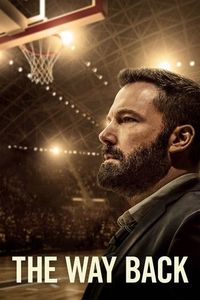
    (On Cable TV, October 2021) There have been so many movies about inspiring high-school coaches that anyone can be forgiven for mentally checking out as The Way Back begins—Ben Affleck plays a middle-aged man asked to coach his alma mater’s basketball team, and if you’re not paying attention, you’d probably expect this to go to the usual conclusion. But then there are the details surrounding the protagonist’s misery—a former basketball star, now a separated alcoholic blue-collar worker, still grieving the death of his son and not exactly a master of self-control. The Way Back isn’t just about the teenage basketball players: it’s also about the coach going through his own redemption arc, and perhaps the biggest narrative curveball of the film is that it’s not a triumphant process: there are plenty of third-act setbacks, and the conclusion barely ekes out a win. Still, Affleck does impress in an unglamorous role, with a bearded face and haggard expression telling us that this isn’t meant to be fun at all. The Way Back is not a particularly high-octane film, but it’s slightly more ambitious than many of its closest equivalents, and it ends up being slightly more than a formula. I still can’t imagine watching it a second time.

  • Caged (1950)

    Caged (1950)

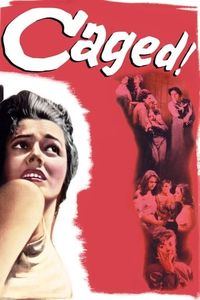
    (On Cable TV, October 2021) Women-in-prison exploitation films are nothing new, especially when they’re toned down just a little bit to become social dramas: I’ve seen examples dating back to the 1930s. Caged is nothing new when compared to later examples of the form, but the harshness of its treatment combined with its film-noir production era does lend it a curious kind of respectability. (People at the time agreed—the film was nominated for three Oscars.)  Much of the film is a story of corruption—terrible prison conditions, of course, but also the corruption of its lead character (a rather good performance by Eleanor Parker) as she goes from naïve young woman to hardened criminal during her time inside. The film spares no plot devices—whether it’s prison-born babies, killed kittens, inmate murder or desperation suicide—to keep viewers incensed and involved. It’s grim and effective all the way to the final merciless line of the film. It’s tautly made at barely 96 minutes, and director John Cromwell keeps things grim and simple. There’s exploitation to Caged, of course, but it’s cleverly crafted and disguised as a socially conscious description of how the prison process itself dehumanizes its victims.

  • My Octopus Teacher (2020)

    My Octopus Teacher (2020)

    (Netflix Streaming, October 2021) As a blend between nature documentary and self-discovery narrative, My Octopus Teacher often seems too convenient to be true—the story of a man who, at a difficult time in his life, goes swimming in the ocean and develops a friendship with a small octopus. As an excuse to go shooting nature footage in shallow waters, it’s unparalleled. The result is quite nice—even knowing that we’re watching a re-creation of the events being told, the colourful footage is striking and the human/octopus interactions are very well done. But it’s in the narrative where My Octopus Teacher outdoes itself—Science Fiction fans will get the frisson of a first-contact story as a human learns to approach and understand an alien intelligence, with occasional setbacks and an inevitably sad ending. While writer-producer-star Craig Foster remains vague over the personal issues he was trying to escape or overcome when he started diving, that leaves the focus of the film on his interaction with his octopus, the way he learns to think like one and the quirks of an octopus’s psychology. The footage, shot over many years following the narrative being told, ably illustrates the story. There’s no denying the intelligence of the octopus, nor the effectiveness in which a narrative overlaid on nature footage makes it even more compelling. You can quibble about some of the emotional manipulation or the particulars of the dramatic recreation, but I find it hard to imagine that anyone save for hard-core cephalophobes would hate My Octopus Teacher: the film is designed to make octopi cute and relatable, and Foster does make for a very likable host as well. The subject matter still manages to be memorable in a growing ocean of nature documentaries, and the way it’s put together is uncommonly effective. No wonder the film walked away with a Best Documentary Academy Award.

  • It’s a Date (2018)

    It’s a Date (2018)

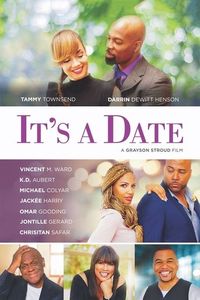
    (On Cable TV, October 2021) It would be far too easy to criticize It’s a Date: At barely 68 minutes, this romantic comedy feels undercooked with a thin, familiar plot extended past an hour by extraneous “bad dates” and “too-demanding clients” montages best seen in other movies. The bare-bones plot revolves around the owner of a dating service who refuses to date an attractive client while dealing with her no-good idea-stealing ex-husband. Not quite having enough plot, the script goes on tangents, follows supporting characters without much conviction and throws in a cheap joke about metrosexuality when it’s looking for more padding material. The low-budget production values of the film are obvious in the humdrum direction, repetitive cinematography, obvious sound editing issues (with buzzes and blanks succeeding each other in a lack of polish rarely seen on TV broadcasts) and cheap sets tightly shot. Tammy Townsend is fine in the lead role, although it’s unfair to her when K. D. Aubert walks in the film and steals most glances, or when Jontille Gerard outdoes her on sheer likability. Meanwhile, Darrin Dewitt Henson is not bad in the romantic lead even if his role is to be puppeteered according to the needs of the script. Probably put together on a shoestring budget by director Grayson Stroud, the film benefits from Los Angeles stock footage to expand on the very small number of sets. But here’s the thing: It may be a bad movie, but I’m not really in a mood to criticize It’s a Date all that much. It’s basic and straightforward, but it’s easy to watch, and there’s something interesting in the script’s blend of romance and business drama that probably could have worked even better with a bigger budget. It’s the kind of romantic comedy that’s easy to like even when it’s flawed and clunky, and even its short length can be seen as an asset when it wraps up so quickly and leaves us before overstaying its welcome. It’s a small success of good intentions over lavish means, and the nature of its genre means that it ends with a smile despite an in-your-face final scene. (Amusingly, the poster spoils what’s probably the script’s most surprising plot development.)

  • Rio Lobo (1970)

    Rio Lobo (1970)

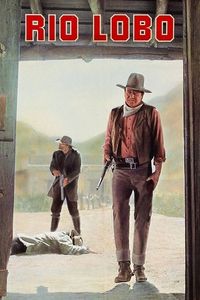
    (On Cable TV, October 2021) The obvious attraction in watching Rio Lobo is that this is the last film from legendary director Howard Hawks, who career spanned the 1920s to the 1970s and produced more than a dozen good-to-classic films along the way. Alas, this is not much of a swan song: saddled with an undistinguished plot that echoes previous Hawks “defend the town” westerns, Rio Lobo is further hampered by John Wayne strutting around in self-satisfied fashion, a remarkable lack of humour, not-so-striking female characters and a noticeable lack of whatever made previous Hawks films so compelling. The film’s production history suggests that Hawks himself is to blame for all of this—a script written to be repetitive, bad casting decisions compounded by on-set conflict and a lack of interest in shooting the best sequence of the film. If Rio Lobo is worth a look, it’s solely for its opening sequence, in which a money train is hijacked thanks to grease on the rails and a wasp nest thrown in the cabin. It’s a dynamic, somewhat inventive action set-piece that recalls Hawk’s earlier, better movies—except that film historians tell us that the sequence was shot by the second-unit director and stuntman Yakima Canutt. Ah well—after that, Rio Lobo settles for more of the same western stuff: fans of the genre will like, but Hawks’ uncanny ability to make good movies no matter the genre is no longer perceptible. It makes for a featureless viewing experience, and a disappointing finish to Hawks’ filmography—a dull film made even worse by aping previous better entries.

  • Miss Grant Takes Richmond (1949)

    Miss Grant Takes Richmond (1949)

    (On Cable TV, October 2021) I happened to go overnight from a 1939 Lucille Ball film to 1949’s Miss Grant Takes Richmond and it wasn’t hard to appreciate what ten years did in defining her persona. Going from cute but largely undistinguishable ingenue to the patented look and behaviour that would ensure her epochal TV success, Ball also used the decade to gather her full face and curly hair that still distinguishes her today. In Miss Grant Takes Richmond, she plays a slightly ditzy young woman who graduates last in her secretarial class and is immediately snapped up by a shady bookmaker who puts up a false real estate front to camouflage his illicit business. After all, who really needs a competent secretary when she’s just supposed to be window-dressing? Alas, his plan doesn’t account for a few wildcards: What our protagonist lacks in secretarial competence she more than makes up in drive, goodness and interpersonal skills: before long, she has transformed our bookmaker in a reluctant but authentic real-estate developer, rallying the community around an affordable housing project—even when hilarious mistakes are made along the way. Then there’s the final flaw: Falling in love with her, even as an old flame threatens to pull him back in the shady life. Ball is in fine form here—there’s a moment where she stares wide-eyed at the camera and we can see the almost fully-formed Lucy of I Love Lucy, going for slapstick with an ease that would be remarkable if it wasn’t designed to look effortless. It helps to have William Holden as a co-lead, able to play a leading man that would be plausibly involved with organized crime. The comedy can get very broad at times—such as the construction site sequences—but Ball is better when she can go full-spectrum on verbal and physical comedy. While Miss Grant Takes Richmond is perhaps too basic to live on as a classic comedy, it’s quite entertaining, fun to watch and an excellent showcase for Ball’s talents just on the cusp of her becoming a superstar.