Month: October 2021

  • Stephen King’s It (1990)

    (On Cable TV, October 2021) Considering the lavish two-part movie treatment given to Stephen King’s It in 2017 and 2019, it’s tempting to dismiss the two-episode 1990 miniseries as obviously inferior. That’s largely true on a technical level—there was a definite limit to what you would do on a TV budget in 1990—but from a plotting perspective, the TV adaptation holds up quite well even today, even to those who liked the Muschietti diptych. It helps to have Tim Curry in the antagonist role, even if the conclusion underwhelms with an overly literal take on the monster’s final form. Still, the result is not bad. Adapting a 1,000+ novel in barely more than three hours is a quasi-impossible assignment, but the result is still cogent and, in some ways, less abrasive than the King novel. (Readers know what I’m talking about.) The cast of character is still too large and too male, but that’s from the novel itself—the TV version finds good ways to create suspense, flow between two distinct periods, keep its entire cast occupied and delivers a rather nice conclusion as a final flourish. Rough around the edges but not bad at all, this version of It still warrants a look for those with recent memories of the next-generation adaptation.
  • Taste the Blood of Dracula (1970)

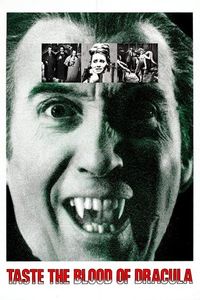
    Taste the Blood of Dracula (1970)

    (On Cable TV, October 2021) What’s fun about Hammer Studio films of circa-1970 is how free they felt to play with the elements of the monster mythos they were inspired by. Having delivered the origin story, they could head in different directions with familiar characters and settings, meaning that we get new stories featuring classic monsters but—this may be the most crucial element of them all—actors that were very comfortable with audiences and with their roles. So it is that Christopher Lee, once more, steps into the shoes of Dracula in Taste the Blood of Dracula—albeit reluctantly and after a good chunk of the film is over, as the producers wanted to head in a different direction but were eventually convinced to get Lee back. The resulting story is disjointed, but it has enough sex (via brothel) and death to make fans happy. The setting is once more somewhere in mysterious 19th century Eastern Europe, but the plot elements will be familiar to Stoker fans. Despite its outlandish title, Taste the Blood of Dracula is not that good, but it is both slightly novel and comfortable at once. The more I’m seeing of that era’s Hammer films, the more I’m convinced that there’s a Hammer Blu-ray collection begging to be added next to my Universal Monster box-set.

  • Frankenstein Must Be Destroyed (1969)

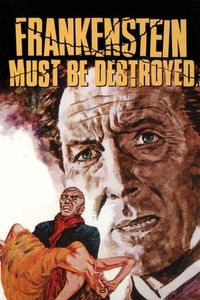
    Frankenstein Must Be Destroyed (1969)

    (On Cable TV, October 2021) By 1969, Hammer Studios had gotten the hang of producing their own takes on the classic Universal Monsters, with successive entries free to take the mythos in a different direction without worrying too much about continuity. The fifth of their Frankenstein films, Frankenstein Must Be Destroyed, begins as the doctor’s lab is trashed, and he goes on to find a way to transplant the brain of an associate in a new body. That’s pretty much it for plot, but then there’s Peter Cushing as Baron Frankenstein to hold the pieces together. (And there are pieces indeed—due to studio interference, an incongruous rape sequence was added despite the director, co-stars and audience objections. And that’s without mentioning the comic relief sequences.)  Frankenstein Must Be Destroyed is a film best seen by Frankenstein devotees—because it plays with familiar elements of the myth and rearranges them in ways that aren’t beholden to presenting the canonical version of the story.

  • Fast Company (1938)

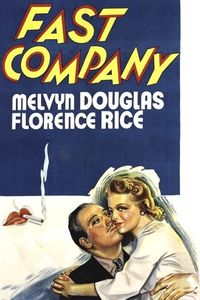
    Fast Company (1938)

    (On Cable TV, October 2021) Any resemblance between the love-bickering, funny-detecting married couple at the heart of Fast Company and Nick and Norah Charles of The Thin Man series is strictly intentional: history has it that theatrical exhibitors asked MGM to deliver a series much like it in-between the long production delays between instalments. MGM obliged, and Fast Company is the first of three attempts (all featuring a different leading cast) to replicate the success of Nick and Norah. Taking on the rather interesting world of rare books, our protagonists are booksellers that moonlight as investigators for insurance companies. Things do get more urgent when murder enters the equation, and the film manages to fit an impressive amount of criminal plot, charming repartee, good character moments and evocative details along the way. Melvyn Douglas and Florence Rice are rather good in the leads, but they will inevitably have the bad luck to be compared to the incomparable William Powell and Myrna Loy. Still, as a short quick piece of entertainment, Fast Company holds its own—it’s methadone compared to the good stuff of The Thin Man series, but it does the job if you’re in the mood for something similar. Exactly as MGM first intended.

  • Hypothermia (2010)

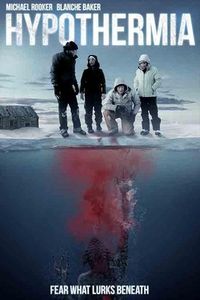
    Hypothermia (2010)

    (In French, On Cable TV, October 2021) At a mere 72 minutes, you would think that creature horror feature Hypothermia wouldn’t waste your time… but that’s a generous assumption. There simply isn’t enough narrative to fill up even that time. Consider that it’s about a family ice-fishing trip and an aquatic monster (« climate change » blablabla) eating a few of the cast. That’s… it. Even the ending takes the rather unusual tack of allowing survivors to escape without taking care of the monster. (But not before a funny final speech in which the mom speaks to the monster as if it was listening intently.)  Michael Rooker stars, but it’s clearly just a paycheque for him, and the same sense of dutiful professionalism from writer-director James Felix McKenney permeates a film that never rises above the basics. I did, as a Canadian, like the idea of ice fishing as a setting… but I can tell you from personal experience that freezing for hours while watching a hole in the river ice is far more entertaining (because of the company) than watching Hypothermia.

  • Slice and Dice: The Slasher Film Forever (2012)

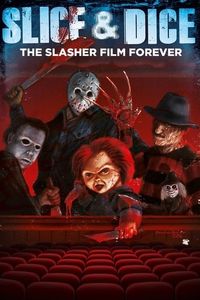
    Slice and Dice: The Slasher Film Forever (2012)

    (On Cable TV, October 2021) I’m not sure why I’d willingly watch a documentary about slasher horror films, considering that I despise the genre—but I’m always up to hear directors, screenwriters and actors talk about craft. Then again, I suppose that I’m not above some occasional hate-watching, especially considering how I know more about the genre than some of its fans. As the title Slice and Dice: The Slasher Film Forever suggests, this is not a critical documentary—by fans for fans, it talks to cast and crew (but not critics!) and doesn’t dig deep in celebrating the genre. Whatever depth it has is in encyclopedic knowledge: The schematic nature of the film starts with an overview of the genre’s history (starting with Psycho, then going to the heavy hitters of the 1980s), then tackles genre-specific topics such as the villains, how to survive a slasher, why there are so many sequels and remakes, what makes the best kills, or the final girls. There is occasionally a bit of perspective from some of the interviewees (Patrick Lussier and Corey Feldman both make a few pointed observations), but not all that much—it’s not particularly pleasant to hear interviewees extol the feminist virtues of “the final girls” while conveniently ignoring the dozens of victims (usually women) killed before that point. Copious footage from the films (although some are unexplainably illustrated by stills—rights issues?) illustrates the matters being discussed. Obviously a low-budget production, director Calum Waddell uses an overall graphic design that feels ugly and amateurish, framing the interviews (which are not always of very high visual quality—probably an artifact of rushing to capture footage) in awkward ways. As a slasher documentary, Slice and Dice is exactly what it wants to be—an affectionate look at the genre from a chorus of sympathetic voices, put together with a low-budget and plenty of good intentions. It’ll do if you want an overview of the genre, but don’t go there if you want a critical perspective.

  • Four Hours at the Capitol (2021)

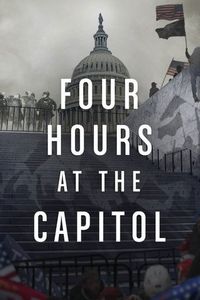
    Four Hours at the Capitol (2021)

    (On Cable TV, October 2021) I really did not enjoy Four Hours at the Capitol very much, but this has more to do with the subject matter than the way the film is put together. January 6, 2021, was a blight on the history of the United States: The executive branch of the American government deliberately attacking the legislative branch by inciting a mob of rioters to interrupt its vote-counting process. I watched most of it live on TV, aghast at the banana-republic antics taking place south of the border. Surely this will change things, I foolishly thought. But not really. Four Hours at the Capitol uses footage and interviews to go through those four hours once again, giving far too much time to the domestic terrorists in a misguided attempt to either strike a false balance between conspiracist nutjobs and everyone else, or to have them explain themselves. There isn’t all that much new material here for those who spent the day watching news channels—although the tunnel episode is harrowingly depicted. Some aspects seem elided, such as the late response of other police forces and their cleanup of the Capitol. It almost goes without saying that the entire leading-up to the events of the day is missing in favour of focusing on those four hours. Worse: Many of the terrorists interviewed for the film seem clueless about the true nature of their actions or their all-encompassing delusion at the altar of a hollow leader—there’s some satisfaction in seeing the consequences of their actions catch up with them, but it’s clear that there’s no rational discourse coming from them. Put together in a few months by director Jamie Roberts, Four Hours at the Capitol amounts to a first draft documentary—concerned about presenting a summary of events, but short on context and inevitably devoid of perspective. Frankly, it’s irresponsible to let crazy conspiracist statements go by without at least some refutation: if the last few years have taught us anything, it’s that “both sides” rhetoric is corrosive by itself. But, of course, for those of us watching on the other side of the US border, what we have learned is that for Americans, there is no offence so beyond the pale, no transgression so unacceptable as to change things. Any nation that goes through Bush v. Gore, 9/11, Abu Ghraib, Sandy Hooks or 750,000 COVID excess deaths without rethinking its core values is, by definition, effectively beyond help. Something else, much worse, will come up. Let’s hope we’re not in the downwind fallout.

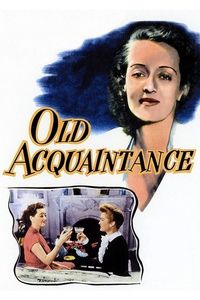
  • Old Acquaintance (1943)

    Old Acquaintance (1943)

    (On Cable TV, October 2021) While the TV Guide log-line for Old Acquaintance has something to do with novelists, don’t be fooled: the film is very much a woman’s drama in which the friendship between two childhood friends (Bette Davis and Miriam Hopkins, who famously clashed during shooting) is described over decades through its highs and lows. It’s not uninteresting, but it does get familiar very quickly, with the usual melodrama and histrionics about wayward husbands, children and overdeveloped egos. The only welcome respite comes late during the film as Davis shakes and slaps Hopkins, bringing a bit more energy into the mix. Otherwise, the entire thing does feel like a Classic Hollywood theatrical production—humourless, technically accomplished, but perhaps more focused on getting the thing done during a difficult shoot. It’s watchable largely thanks to Davis, but hardly remarkable outside the shaking-and-slapping sequence.

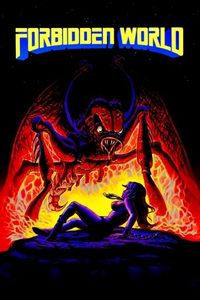
  • Forbidden World (1982)

    Forbidden World (1982)

    (In French, On Cable TV, October 2021) As far as blatant Alien rip-offs go (you know: blue-collar crew stuck in ship/station/planet with a killer alien force), I have seen quite a bit worse than Forbidden World. Playing like a trashier, but more self-consciously entertaining version of the Ridley Scott classic, it features impressively gruesome gore effects, a dizzyingly incoherent storyline, some half-clever ideas and set-pieces, and some terrible editing. In other words: a mixed bag, but a rather bewildering one that keeps our interest. This being a Roger Corman production, there are obvious similarities with that other Alien rip-off Galaxy of Terror, but Forbidden World is just a bit less dour, and not tainted by a few repulsive sequences. Director Allan Holzman has an intention to entertain despite the gloopy creature effects, much gratuitous nudity, suicidally dumb characters and a rather darkly amusing sequence in which the humans attempt to negotiate with the murderous creature. No, Forbidden World is not great art. But I’ve certainly seen much worse, and in its best moments it recalls the glory days of rubbery 1980s horror cinema at its craziest.

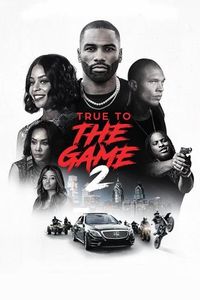
  • True to the Game 2 (2020)

    True to the Game 2 (2020)

    (On TV, October 2021) Considering my low opinion of the first True to the Game, I really wasn’t expecting much from the follow-up. To my surprise, it’s actually better than the original—not by much, and not enough to rate as a good film, but at least it’s not filled with annoyances as the first was. While the first was an unwieldy adaptation of a self-published novel, this one seems to be a purely cinematic expansion, picking up a short time after the events of the first film. Our protagonist (Erica Peeples, not bad) has become a NYC journalist, grown a more flattering hairstyle, and polished many of the most irritating edges of her personality. When she gets an offer to profile a rich businessman in Los Angeles, she drives there (what?!?), is romanced by two men (one of them white, the other black—and surprisingly enough for a BET-broadcast production, it’s the white guy who’s the good one) and gets a largely useless revelation from her interviewee. Meanwhile, shenanigans back in Philadelphia put the rest of her family once again in danger in what is largely a separate subplot. Finally, there’s a dangerous man who sets out to take revenge (or at least money) from the protagonist by seducing her before his inevitable betrayal. Those are big broad strokes of plot and they’re not even gracefully integrated together. Characters make decisions that only work because they lead to the next plot point (and sometimes not even that, such as the inexplicable decision to drive from NYC to L.A. rather than take a plane), there are nick-of-time coincidences and the film ends before resolving its own plot, obviously announcing the eventual arrival of True to the Game 3. Still, I did not dislike the brute-force entertainment of the results (macho gangsterism, cheap thrills, naked girls and all) and certainly liked it better than the clumsy original.

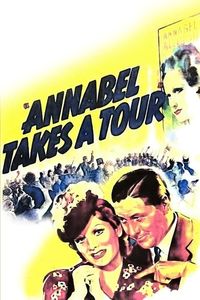
  • Annabel Takes a Tour (1938)

    Annabel Takes a Tour (1938)

    (On Cable TV, October 2021) You can take my review of The Affairs of Annabel and use it almost as-is for sequel Annabel Takes a Tour—hurray for consistency in series-making, I guess, but given that my first impression wasn’t good, the second film could have at least improved on the first. But no—once again, we have the peppy young Lucille Ball as a Hollywood actress being manipulated into all sorts of shenanigans by her publicist. More diverting than entertaining, this is recognizably a comedy taking aim at the Hollywood hype machine, except that the comedy feels laborious and half-hearted at best. Ball herself gets a few smiles, but only because she goes beyond what the script specifies. But once again, Jack Oakie mugs for the camera and doesn’t have a fraction of Ball’s appeal—history has it that the Annabel series, which got off to a roaring start with two films in 1938 alone, stopped dead in its track when he asked for too much money for a third instalment. He may have done the world a favour, not only terminating a humdrum series before it went too far, but also freeing Ball to play elsewhere.

  • Room at the Top (1959)

    Room at the Top (1959)

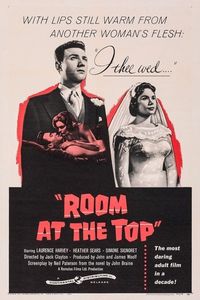
    (On Cable TV, October 2021) The taboos of one era are the snoozefests of later generations. While I’m aware of Room at the Top’s reputation as one of the first of the British New Wave, a taboo-breaking drama unafraid to go mundane and bitter in its conclusion, it plays like a dreary drama these days, considering how often it has been imitated and so thoroughly it has been outclassed by follow-ups. The story follows a protagonist of humble origins, as he deliberately pursues an heiress for social purposes. But wait! Things take a turn as he falls for a married woman of humbler origins. Of course, things don’t remain so simple for long, as the protagonist finds himself stuck in a trap partially of his own doing—all the way to the ending, which looks superficially happy but condemns him to a life of misery. Simone Signoret is reliably striking as the married woman (she earned an Oscar for the role). Compared to many other films of the time, Room at the Top was something unusual: dourly rejecting the pursuit of social status in post-war England, it took the glum worldview of noir and put it back into mainstream drama, leaving audiences without a clear-cut release. Even worse: it took a decidedly unromantic look at sex, marriage and affairs. Nominated for the Best Picture Academy Award, it does remain an effective drama, but twenty-first century viewers will have seen all of this, and better, in countless pieces of popular entertainment since then. That doesn’t make Room at the Top bad, but it does strip it of the distinction it enjoyed at the time.

  • The Knack… and How to Get It (1965)

    The Knack… and How to Get It (1965)

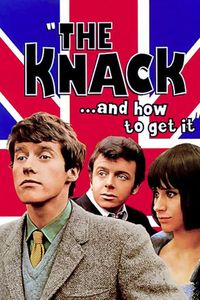
    (On Cable TV, October 2021) Even fifty-five years later, The Knack… and How to Get It is still in the running for one of the most distinctive movie titles in film history, a bit of originality matched by its still-unusual execution. At its heart the story of a romance between a shy young man and an eccentric young woman as complicated by the deeds and declarations of a vastly more experienced friend, the film finds its full expression in the way it’s presented on-screen. Eschewing traditional style, this product of the London-centric Swingin’ Sixties features jump cuts everywhere, occasionally humorous subtitles, older people shaking their heads at the actions of our young protagonists, a decidedly odd sense of humour and more time following the antics of its characters than drinking in the atmosphere of mid-1960s London. (And, if you have to ask, the titular “knack” is being attractive to the opposite sex.)  Rita Tushingham is very cute as the female lead, and the very long sequence in which she repeatedly (falsely) claims rape is either hilarious or offensive (or likely both) even today. To many viewers, The Knack… and How to Get It is somewhere in the middle of a line that touches upon A Hard Day’s Night (also from director Richard Lester the previous year), The French New Wave (with editing techniques borrowed from A Bout de Souffle) but also Benny Hill sketches with its character entering and exiting random doors, non-sequitur dialogue and everything-goes comedy. It’s a wild mixture and while it’s definitely dated, it’s still rather entertaining to watch if you give it a chance.

  • Monster Hunter (2020)

    Monster Hunter (2020)

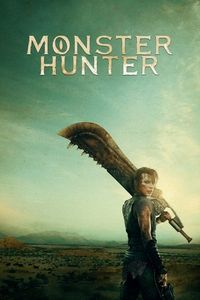
    (Amazon Streaming, October 2021) As someone who has played a lot of videogames, I always twitch when movie reviewers use “feels like watching someone else play a video game” as a slam against bad movies. But sometimes they do have a point, and it takes a surprisingly short time for Monster Hunter to become, well, about as boring as watching someone else play a video game. This is not helped in the slightest by a narrative structure that has the heroine (Milla Jovovich, in a familiar role) battling one type of monster after another in relative silence with a non-speaking NPC supporting character (Tony Jaa, good yet unremarkable) before a very thin amount of plot right before the final boss battle. Not having played the Monster Hunter video game series, I won’t have too much to say about the adaptation—but I remain impressed (not in a good way) at how the film manages to suck a lot of energy out of a dragon-versus-Ospreys battle. Writer-director Paul W. S. Anderson is now an old hand at that exact kind of film (i.e.: action-driven videogame adaptations featuring his wife Jovovich) and it’s troubling that he’s not really getting better at it: His screenplay barely touches upon the possibilities of his premise, his directing barely gets the point across, his cinematographic decisions are repetitive, and his frantic editing preference undermines the effectiveness of his own direction. (If anyone wants to pass a law mandating that one second is the minimum amount of time a cut should be, I’m all for it on the basis of this film alone.)  Even the wall-to-wall CGI feels uninvolving despite scary huge monsters. It makes for a curiously forgettable film—yeah, sure, Jovovich fights monsters but there’s really no reason to remember the rest. Monster Hunter seems determined to launch a new series, perhaps as a replacement for the played-out Resident Evil franchise. We’ll see how that goes.

  • The Farmer’s Wife (1928)

    The Farmer’s Wife (1928)

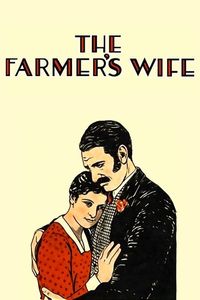
    (On Cable TV, October 2021) Not many people know that Alfred Hitchcock directed pure romantic comedies—of those who do, most will name Mr. And Mrs. Smith. Fewer still will say The Farmer’s Wife for good reasons—it’s a silent, black-and-white film that predates not just the Hollywood classics that made him famous, but the British precursors that landed him on the map. It does reinforce the amazing achievement of a career that spanned six decades (from the 1920s to the 1970s), and gives credence to the theory that his mastery of visual storytelling was first forged in the crucible of silent cinema. From the get-go, with its exterior shots of the British countryside, Hitchcock doesn’t have much trouble getting himself understood without the use of title cards, even though the pacing is typically slowed down by repetition made necessary by a less movie-literate audience. The plot is simple and schematic, as a widower targets four single women in his village as a potential replacement for his dead wife, and strikes out with all of them before predictably ending up with the maid that faithfully helped him along the way. It’s all meant to be sweet, but twenty-first century viewers will have a harder time dealing with the unpleasant personality of the protagonist after being rejected by his romantic prospects—or simply the assumption that asking is good enough for romance. Still, the film does work even in its slowed-down pace (if you have a smooth fast-forward functionality, this is an ideal pick) and some of the visuals are interesting—I mean, who can resist the tidal waves of dogs going to a fox hunt? The Farmer’s Wife is also useful in that it truly separates the Hitchcock fans from the pack—who else is even going to remember such an atypical piece of juvenilia?