Month: October 2021

  • You Can’t Fool Your Wife (1940)

    You Can’t Fool Your Wife (1940)

    (On Cable TV, October 2021) Roughly as ordinary a product of Classic Hollywood as it’s possible to get, You Can’t Fool Your Wife is your average potboiler comedy—made by studios to showcase a rising star (Lucille Ball), with straightforward execution in service of a slight story. The film barely makes it to 68 minutes and relies on familiar comedic devices. As the story goes, a loving couple finds itself in a rut after a few years of marriage—not helped by an overbearing mother-in-law and some trouble coming from his office. It takes a long time for this dreariness to become funny—past the halfway point, past an ugly separation, past the point when it should feel like a comedy rather than something too dispiriting to be fun. But the comedy does begin in earnest in the second half, as the estranged wife embarks on a program to regain her husband by passing herself off as someone else at a party. It eventually works itself up to an amiable watch, albeit tempered by some outdated social mores that are not executed well enough to be charming. Ball herself is cute but not quite striking here—a trademark of her early roles. But in the end, You Can’t Fool Your Wife probably would have sunk in deserved obscurity if it didn’t feature her—it’s very ordinary, outclassed by much better similar films and not completely successful in its execution.

  • The Thing Called Love (1993)

    The Thing Called Love (1993)

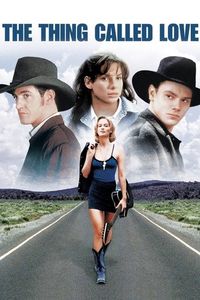
    (On Cable TV, October 2021) I still have many films to go before I’m done with Peter Bogdanovich’s filmography: he’s had an eclectic career, and while his best-known films are almost classics, the rest of his work is practically obscure. I certainly had no idea about The Thing Called Love, although the circumstances of the film’s release (close to the untimely death of its headliner River Phoenix, ensuring a quasi-confidential release out of fears to be seen exploiting the situation) have not helped the film reach posterity. It probably doesn’t help that it also heads for familiar territory in showing the low-intensity struggles of four songwriters working to strike it big in Nashville. Despite a few romantic sparks, the film remains about struggling artists and how they congregate every week for a chance to play at an influential local bar. For many viewers, the draw here won’t be for Bogdanovich’s careful direction but seeing a main cast featuring young River Phoenix, Samantha Mathis, Dermot Mulroney and Sandra Bullock. The soundtrack is not bad (and I say this while having no special affection for the country/western genre), although the romantic subplots feel underwhelming compared to the performing aspects. The script does have a sense of humour, and the result is not much of a chore to sit through. Still, The Thing Called Love will never be considered an essential film—perhaps for fans of the lead actors, perhaps for those invested in songwriting (as opposed to simple vocal performance), perhaps for Bogdanovich fans.

  • Finding Love in San Antonio (2021)

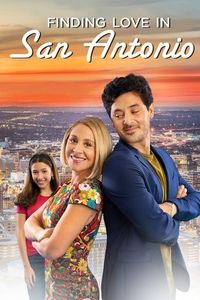
    Finding Love in San Antonio (2021)

    (On Cable TV, October 2021) As of this writing, eleven days after its TV premiere, there is an exact total of zero reviews, votes or acknowledgement of Finding Love in San Antonio’s existence on the Internet, other than press releases and factual information about its production. (Don’t worry—by the time this review is published, with year-long delays, there ought to be more.)  This is not exactly surprising: As a low-budget romantic comedy made for daytime TV and niche streaming sites, this is not a film meant for popular acclaim, critical attention of anything more than a product fit to be licensed in bulk. It’s innocuous, charming in the most forgettable ways and assembled on a factory line. (Proof? Production company American Cinema International is already putting a “Finding Love in…” series that also covers Mountain View and Big Sky, Montana. That’s after a line of films called “Love Finds You in…”)  Still, I had a rather good time watching Finding Love in San Antonio—as a food-themed daytime romantic comedy, it goes slightly beyond the basic requirements of the genre. It has the welcome distinction of a heavy Hispanic-American component, with most characters being of Latin ethnicity and slinging bits of dialogue in what sounds like fluent Spanish. The film seldom skimps on the food itself (a surprisingly common flaw of other food-themed romantic comedies), and the romantic plot occasionally takes a back-seat to more inclusive familial problems for the protagonist and her entourage. The romance itself isn’t overly cloying and the sights of San Antonio are represented with a great deal of colour and flavour by director Sandra L. Martin. The actors are clearly second-rate, but they’re likable enough to mare it all work, especially Valentina Izarra as she anchors the film as the single-mom chef protagonist. This may not sound like much compared to heavier fare, but when compared to similar films of its kind, Finding Love in San Antonio is slightly more distinctive than most and that’s not too bad for something that will go largely unseen and uncommented by wider audiences. Too bad—sometimes, a little comfort food, slightly spiced, is exactly what hits the spot.

  • Girl Shy (1924)

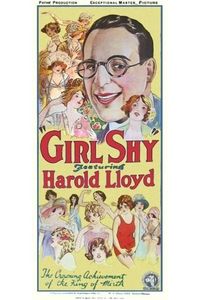
    Girl Shy (1924)

    (On Cable TV, October 2021) While Harold Lloyd is not as well-known these days as fellow silent comedians Charlie Chaplin or Buster Keaton, he was a comedic force then, and is still very entertaining today. While Girl Shy doesn’t have the madcap rhythm and invention of some of his other films, its romantic comedy still holds up decently well today. Eschewing rapid-fire gags in favour of more character-based moments until its more frantic climax, Girl Shy reprises Lloyd’s “Glasses” character—a young man with a good heart but crippling shyness in presence of girls. His problems begin once he gets a crush on a high-class beauty, all the while writing a book purporting to reveal the secrets of seduction. His book is predictably hilarious, which doesn’t play as he’d like in the publisher’s hands. There’s the usual number of complications, but it culminates in a suddenly madcap sequence in which a wide variety of transportation methods are used in order to make it from one town to another. That’s easily the comic highlight of the film, but (as with Safety Last!), the rest of the film, setting up the stakes, is not uninteresting.

  • Love and a .45 (1994)

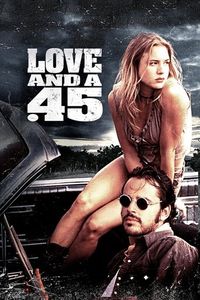
    Love and a .45 (1994)

    (On Cable TV, October 2021) I have noted elsewhere how films working in an overexposed genre (or standing in the shadow of a far more famous film) are often best rediscovered years later, when the sentiment of repetitiousness has been replaced by a mild nostalgia for a genre no longer being overproduced. So it is that Love and a .45, as a road crime movie featuring a young couple of criminals on the run, was easily overshadowed by Natural Born Killers (released four months earlier in 1994) as well as other road/crime/romance movies à la Kalifornia, True Romance and going back decades to The Getaway, The Sugarland Express, Bonnie and Clyde, or even earlier to Gun Crazy. Suffice to say: There isn’t much new here in conception, but the execution still carries a kick. Executed in low-budget gritty charm, Love and a .45 does feature above-average dialogue and narration, some interesting characters, decent pacing and an intriguing soundtrack. As far as modern westerns go, it does work. For more fun, have a look at a young Renee Zellweger playing a character far more animated than her later, more sedate screen persona. While not a great film, Love and a .45 is probably better than the reputation it got back in 1994 as this pale shadow of Natural Born Killers. It’s entertaining enough, and the lack of Tarantinoesque movies in the past few years probably makes it a fresher experience than it was for the first decades of its existence on home video.

  • Spiral: From the Book of Saw (2021)

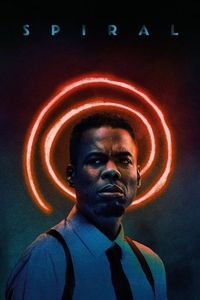
    Spiral: From the Book of Saw (2021)

    (On Cable TV, October 2021) As a vocal opponent of torture films, gory violence and cinematic nihilism, I do have a softer spot than many would expect about the Saw series. While I don’t have much use for its elaborate traps or sudden sprays of bodily parts, I rather liked some of its more outrageous narrative twists, grimy industrial settings, go-for-broke editing (especially when it’s trying to cover up some plot nonsense) and moralistic intentions—even when it doesn’t stick to it. This being said, I wasn’t begging for another instalment: Considering Tobin Bell’s inimitable performance and the convoluted backflips of the narrative after nine instalments, the series can rest easy for a long while. Spiral wisely doesn’t try to fit even more material in the series’ overstuffed mythology—it plainly goes for an explicit spinoff, and adopts a slightly different tone by moulding itself into a police thriller. Chris Rock, of all possible choices, gamely tries to reinvent himself as a more serious dramatic actor by playing an outcast police officer who becomes the focus of a copycat killer working in Jigsaw’s tradition. Much of the film, from a narrative perspective, plays like one of those 1990s serial killer thriller, with the police racing to find the culprit. The distinction here is that the killer is targeting corrupt cops—alas, a concept that seems too timid now that everyone is grappling with the consequence of systemic police brutality. The result is something like a new direction for the series, but one that doesn’t manage to get very far in establishing itself as something worth pursuing. Sure, it’s interesting to see Rock (his face sculpted by age and facial hair) go for thrills and drama while still spouting his fair share of one-liners. Oh yes, Samuel L. Jackson does have something new to do here. Fine, the police procedural is a nice change of pace. Indeed, there’s a narrative twist worthy of the Saw series. But none of this is quite enough. The fascination for the traps is overdone and underwhelming: the film could have dispensed with them without problem, especially considering how insipid they become over time. (Worse: the film tries to have its cake and eat it too by allowing the victims to defeat the trap… only for them to die gruesomely anyway moments later. But this is far from the first instance of botched morality in the series.)  It’s all loud and quick on the editing, but the substance is just as lacking as in earlier repetitive instalments of the series. I’m not sure if Spiral will ever get a sequel, but I don’t think anyone will demand it.

  • Official Secrets (2019)

    Official Secrets (2019)

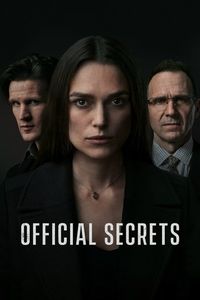
    (On Cable TV, October 2021) It certainly takes a while for Official Secrets to heat up: Limited by its almost-documentarian approach to a true story, it leisurely sets up the elements of its narrative before getting to the good material, which is the aftermath of a whistleblower’s revelation of dirty tricks in the lead-up to the American invasion of Iraq. It’s not enough to tell the truth—the British law is set up to severely punish anyone who reveals classified information and creates a Kafkaesque nightmare along the way. The story is familiar and so is the era (anyone recall Fair Game?) but the message is worthy and the execution is competent. For director Gavin Hood, this feels more and more like a return to the realist thrillers he used to direct before a short Hollywood blockbuster interlude. In front of the camera, Keira Knightley does well in the lead role (is it too early to hail her reinvention in character-driven parts?), with such notables as Matt Smith, Matthew Goode, Rhys Ifans and Ralph Fiennes in supporting roles. After rather a lot of throat-clearing to establish the characters, the institutions and the way they interact, Official Secrets become far more interesting when the whistleblower and her husband are attacked by the British government, with newspapers and lawyers aligning themselves on different sides of the law, and the resolution going all the way to the justification for the war itself. Aimed at older, more patient audiences, Official Secrets eventually becomes as gripping as it should be.

  • Fear of Rain (2021)

    Fear of Rain (2021)

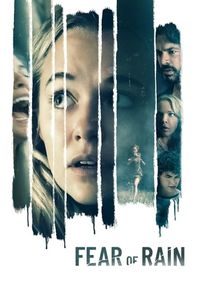
    (On Cable TV, October 2021) There’s a point, halfway in Fear of Rain, when I realized that whatever the film was going to do next was going to be disappointing. There was no possible escape. Either choice was bound to be underwhelming. Considering that this point came before a twist that I disliked, don’t expect this review to be particularly gentle. As the film begins, we get to know our young protagonist: recently released from a psychiatric institution, she sees things that aren’t there and hears voices that don’t exist. Quickly ostracized at school for obvious reasons, she finds some companionship in a quirky boy, but grows increasingly convinced that her next-door neighbour is holding a small girl hostage. Having already gone so deep in a psychological thriller, viewers know that there’s more to come. Either we’re going to go supernatural or not, either she’s going to be right about the neighbour or not. Heck, are we even convinced that all characters are real?—as the film itself points out, that new boyfriend seems too nice to be true. By the time Fear of Rain wraps it up in a flurry of imaginary characters, psychopaths, and self-reflective irony, I wasn’t exhilarated as much as convinced of three things: 1. Spending time inside a schizophrenic character’s head is not pleasant; 2. This is not the ideal film to talk about mental illness; and 3. The trend of movies with imaginary character needs to go away fast. The fast-paced ending does make up for some of the preceding dreariness, but not that much—Fear of Rain still feels overlong and unpleasant, and in the worst “psychological thriller” tradition pushes believability far beyond the breaking point. No matter what writer-director Castille Landon intended, she was limited by her premise—it’s not easy to deliver a satisfying story when it starts by acknowledging that not everything is real.

  • The Magic of Belle Isle (2012)

    The Magic of Belle Isle (2012)

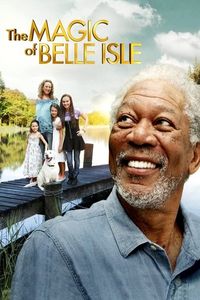
    (In French, On TV, October 2021) It’s not always a bad thing when professionals go slumming: In most cases, you end up with something competently done, watchable even if not particularly interesting. The starting point of The Magic of Belle Isle will feel very familiar, as an alcoholic writer moves into a summer residence and gradually gets acquainted with the next-door divorcee and her kids. Will they be able to bring him back from the abyss of self-loathing? Asking the question is answering it—especially considering the long list of movies in which nothing is more important than saving an alcoholic writer from himself. Oh, there are a few differences, of course: Morgan Freeman plays the writer, and the age difference between him and Virginia Madsen (as the divorcee) means that the romance is thankfully implied more than shown, and much of the film’s relationship-building goes between the protagonist and a girl with interest in writing her own stories. The Magic of Belle Isle is not a bad movie, but it’s an overly trite one: Writer-director Rob Reiner is not pushing himself here, and the actors are working within well-trodden material. At least it’s meant to be uplifting without being too dramatic about it, meaning that even the emotional manipulation is tolerable. As usual, Madsen does look terrific, and the cinematography reinforces the comforting impression of a summer spent in a quaint destination village. It ends exactly how you think it will end, and that’s it. The Magic of Belle Isle is a sub-par effort from Freeman, Madsen and Reiner, but it hits its modest marks well enough.

  • Slumber Party Massacre (2021)

    Slumber Party Massacre (2021)

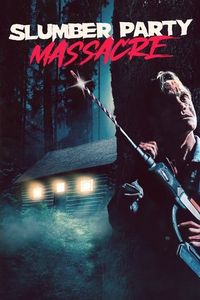
    (On TV, October 2021) As someone who’s most definitely not a fan of slasher horror films, I never asked for a Slumber Party Massacre remake and openly question why such a thing needed to exist. Why resurrect this misogynistic, exploitative, brain-dead genre? The first few minutes of the remake offer no answer—in fact, they ask the question more loudly, as writer Suzanne Keilly and director Danishka Esterhazy offer nothing more than a contemporary remake of exactly the kind of film I dislike, as a drill-equipped killer goes around ludicrously slaughtering three likable young women. But that’s far from being the entire film, and as the prologue goes past, the pieces are put in place for a far wittier follow-up. Twenty years later, the sole survivor of the massacre has a daughter, and the young woman is heading out for a weekend of slumber party fun with a few friends. Alas, the car breaks down, the creepy locals redirect them to a cabin around the lake of her mom’s massacre, and they strip down to their underwear… But hold your groans just a few minutes longer, because, as the unexpected fifth member of their party soon learns, they’re not there for alcohol and pillow fights: they have knives hidden underneath the pillows and are deliberately awaiting the killer to strike again so they can take revenge. This initial twist out of the way, this Slumber Party Massacre remake becomes far more interesting—although slightly too forced to be entirely likable. Oh, there’s some fun in having a few young men from across the lake step by the cabin to check if the girls are OK and being spooked by the knives lying around… just as there are more laughs to be had in having the girls go warn the guys about psycho killers while they’re having a good old pillow fight among bros. Then there’s a shower scene that flips the whole male-gaze thing on its head. But in trying to subvert, this Slumber Party Massacre often goes too far and too bluntly: The shower scene goes on and on after making its (hilarious) point, blunting its punchline. The dialogue also pushes its agenda with on-the-nose dialogue filled with buzzwords that no one would reasonably say in real life. The messaging of the film also distracts from some elementary problems in terms of staging and plausibility: Bringing knives rather than guns to a psycho fight is a stupid idea, and no amount of phallic meta-cleverness is going to convince me that a character can drive an inch-wide drill bit through another human body barehanded. Then there’s the fact that Slumber Party Massacre remains a slasher, and a gory one at that—there’s a limit to how far my appreciation can go when it’s still about violent deaths and unexamined assumptions about violence. (The film does hint at its awareness of its lead characters’ unsettling thirst for violent revenge, but doesn’t do much about it because it’s a slasher after all.)  Despite its female gaze, the film couldn’t keep me from liking Hannah Gonera and Schelaine Bennett in their roles as a dynamic mother/daughter team. I’m slightly amazed that the film was produced for TV (as a Syfy premiere, but widely available on a variety of other channels even up here in Canada) because this Slumber Party Massacre is easily better than the original—at least in the amount of cleverness that went into addressing the flaws of slasher films in a far less forgiving society. Don’t quit before the prologue is done, though—in fact, you may want to skip ahead to the title card and see how it goes from there.

  • Bones (2001)

    Bones (2001)

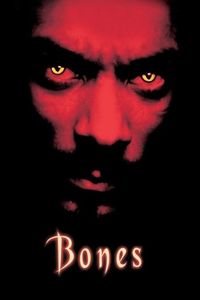
    (In French, On Cable TV, October 2021) Good or bad, what you will remember about Bones is this: Snoopy Dogg, playing a pimp who comes back from the dead and reunites with his wife as played by Pam Grier. Doesn’t this sound like something worth watching despite the quality of the result? Clearly hailing from the early 2000s with its terrible cinematography, Bones does have slightly more ambition than most low-budget films in taking place both in the present, and in a yellow-tinged 1970s filled with afro hairstyles and period clothes. Dogg is killed and buried in the basement of a strange skull-shaped building, but the fun begins thirty years later as blood sacrifices resurrect him and he goes on a rampage of revenge. Some decent practical special effects are undone by a misguided directing style that puts clumsy digital effects where they have no business. The attraction here is Dogg trying an acting role, clearly enjoying the pimp aesthetics of his pre-mortem character and then the vengeful aspect of his resurrection. Besides him, Grier is never less than splendid. The rest of the film, unfortunately, pales in comparison: the young people supposed to be the protagonists are rather dull compared to Dogg and Grier, while the narrative can’t quite do justice to the other ambitions of the film. As a low-budget horror film, Bones is better than most, but not good enough to be considered a success beyond its novelty value. It’s worth a look if you’re partial to Dogg or Grier, otherwise not so much. As a side note, I was amused to hear the French dubbed version try to replicate Dogg’s distinctive soft-spoken vocal cadence: it’s no replacement for the original, but it’s certainly evocative of it.

  • Witchouse II: Blood Coven (2000)

    Witchouse II: Blood Coven (2000)

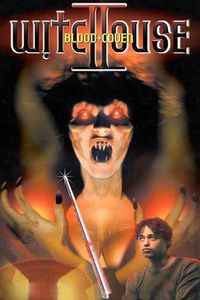
    (In French, On Cable TV, October 2021) I liked the first Witchouse more than I probably should (but then again, cute witches are one of my secret weaknesses), so I’m disappointed to report that its sequel Witchouse II: Blood Coven does nothing much for me. The goofy haunted-house sexiness of the original is gone, replaced by nothing much more than found-footage segments supporting a dull story about academics investigating mysterious graves. It’s clear that this film was shot in the wake of the massively successful (and even more massively cheap) Blair Witch Project, considering the overuse of shaky VHS footage for no good cinematic reason. It dates the film more than anything else, and also sucks away any building interest. The return of Ariauna Albright is a rare highlight, but she’s not used particularly well in a film that lands with a thud. I wasn’t expecting much from a Full Moon Studios picture, but I was expecting more trashy fun than this. There’s apparently a third film in the series, but I think I will stop here.

  • La casa 5 [Beyond Darkness] (1990)

    La casa 5 [Beyond Darkness] (1990)

    (In French, On Cable TV, October 2021) As film history has it, the first two Evil Dead movies were released in Italy as the first instalments of “La Casa” series, which was followed by three other unrelated haunted-house films released as sequels despite having nothing to do with the first two films, either in production, tone or continuity. La Casa 5 certainly needed the marketing boost because it has little to offer by itself. At heart a bog-standard haunted house story with a little bit of The Amityville Horror and The Exorcist as a centrepiece, it belongs to the school of low-budget, low-effort horror that thinks that simply throwing more stuff into the mix automatically makes it better. The result, alas, is a big messy blob with witches, killers, priests and flying objects—with a subpar execution sucking much of the fun out of it. Horror fans will note, but not be surprised, that it’s directed by Trolls 2 filmmaker Claudio Fragasso. Is there anything more to add after that?

  • Anna Christie (1930)

    Anna Christie (1930)

    (On Cable TV, October 2021) I really tried to stay interested in Anna Christie, but sometimes, the gap between what a film has to offer and what we’re willing to give is just too great. It doesn’t help that I have no specific fascination with Greta Garbo, as much of the initial hoopla about the film (and one of its distinctions to this day) was “Garbo Speaks”—the first sound film of one of the studio’s biggest silent film stars. The plot, adapted from a theatrical play by Eugene O’Neill, has to do with the protagonist having a dark past that she has difficulty sharing with her new fiancé. But Garbo is not that exciting a performer—she does fine, but doesn’t bring much compared to other actresses. Marie Dressler is more fun (in a grating way) as an older woman with coarser dialogue. Much of Anna Christie’s lack of interest comes from its early sound technique—while a prestige production at the time, it’s a rough film nowadays—although I was surprised to find a few complex camera movements so early in sound film history. Still, much of the story has lost its shock value (“Fiancé, I worked in a brothel for a few years” is still a dramatic plot device, but not what it was back in 1930) and the film has been technically surpassed many times over since then. Anna Christie is more noteworthy for what it represented upon release than for straight-up viewing pleasure right now.

  • Il bidone [The Swindle] (1955)

    Il bidone [The Swindle] (1955)

    (On Cable TV, October 2021) I’m not a big fan of Italian neorealism, but there is both a crime tinge and an ironic edge to The Swindle that makes it compelling viewing. Featuring no less than Crawford Broderick as a master con artist working with two younger men, this is a story of how people can grow too old for the criminal life, and what happens if they can’t find a way out. Much of the film’s infuriating centrepieces are descriptions of elaborate cons in which poor innocents are convinced to hand over significant amounts of money in exchange for little more than cheap trinkets and empty promises. Beyond those cons, however, we have the swindlers trying to live normal lives, either by lying to their wives (soon exposed), taking their criminal habits in unwelcome company (never try to steal at a master thief’s party), or reconnecting with estranged relatives. The Swindle doesn’t hold anything back in showing the consequences of a life of swindling—from living from one con to the other, to the real risk of coming face-to-face with past victims not inclined to forgiveness. The ending is tragic but entirely deserved, wrapping it all up with a few final ironies. The Swindle is not usually recognized as one of writer-director Federico Fellini’s finest films, but it does have in narrative what some of his other films often lack: a mixture of middle-age contemplation and sharp criminal details that wrap up an eminently watchable drama.