Month: October 2021

  • Gwai wik [Re-cycle] (2006)

    Gwai wik [Re-cycle] (2006)

    (In French, On Cable TV, October 2012) It’s not unusual to find films turning into horror midway through (especially when the first half was merely camouflage), but it’s much rarer to find a horror movie turning into something else midway through. But that’s what happens in Re-cycle, as a romance novelist in search of inspiration suddenly experiences unsettling events… and is then transported in a fantastic realm. From spooky horror, the film shifts into a personal journey set against an otherworldly environment. It’s all directed with some skill by The Pang Brothers, especially when it comes time to integrate visual effects at the forefront of the film. The result isn’t some kind of unimpeachable masterpiece—the tone shift could have been more graceful, the lead character is often annoying and the pacing (especially in the first section) is far too leisurely. But things pick up once we get in the protagonist’s mind, as Re-Cycle also becomes something more ambitious than just another ghost story.

  • Pépé le Moko (1937)

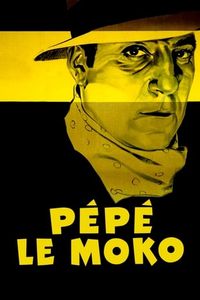
    Pépé le Moko (1937)

    (On Cable TV, October 2012) Often presented as part of the proto-film noir corpus, Pépé le Moko has a surprising aura of modernity about it—almost as if it was a 1950s film sent back twenty years earlier. In many ways, it prefigures the French Nouvelle Vague and its preoccupation with crime stories as a framework for character-driven moments. Here, we spend the film in Algiers, specifically in the labyrinthine Casbah where our titular character hides from the authorities. Pepe is an underworld prince—a master thief commanding respect and the attention of authorities seeking to flush him out. As the film begins, our protagonist gets stir-crazy from being confined in the same surroundings with the same woman for nearly two years. At the same time, another attractive woman passing through Algiers makes his acquaintance and the attraction is immediate. This obviously won’t end well (Pépé le Moko intentionally pushes things to poetic tragedy), but the way to get there is filled with a fascinating environment, intriguing characters, some good set-pieces and an approach that still feels compelling three-quarter of a century later. Writer-director Julien Duvivier makes a few good choices along the way, starting with casting Jean Gabin in the lead role. I was fascinated by some of the supporting characters—particularly the unusual beauty of Line Noro, and Lucas Gridoux as a cleverly shifty inspector. The ending shifts from crime thriller to romantic tragedy, but it does make sense—Duvivier is working in the French poetic realism tradition, and you can see in Pépé le Moko a springboard from that to the Nouvelle Vague. But even if you’re not quite up to speed in historical film movements, Pépé le Moko has enough to keep you interested from beginning to end.

  • Slash (2002)

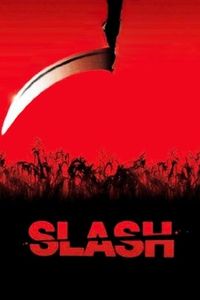
    Slash (2002)

    (In French, On Cable TV, October 2012) As someone who’s definitely not a slasher-horror fan, I’m slightly surprised to find that that South African rural horror film Slash is actually… tolerable. There’s an interesting fusion between the farm location and the rock musicians of the cast that is more amusing than the norm, and there’s a comedic accent in the way the film deals with its characters and fake-outs. You wouldn’t know that the film is from South Africa if you skipped the credit—visually, it seems intent on passing itself off as American Midwest horror and the cast is filled with American actors. The premise is some kind of mixture between “city people stuck on a farm” and “folk horror with pagan roots” (i.e.: irrigate the land with blood), but it’s in the moment-to-moment material that Slash does better than the norm, whether it’s the banter between characters, a wholly unexpected rock band number toward the end, or the way director Neal Sundstrom plays to audience expectations. None of this makes Slash essential or overlooked, but it does make it a better experience than most other slashers out there.

  • Today we Live (1933)

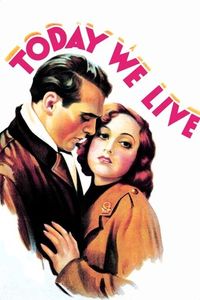
    Today we Live (1933)

    (On Cable TV, October 2021) I got interested in Today we Live because I’m trying to complete my Howard Hawks filmography, but not every one of movies is a hit, and this early effort goes right in the bottom tier. On paper, there’s certainly plenty to like about the film and the people it involves. I mean: Directed by Hawks! Dialogue by William Faulkner! Featuring Gary Cooper, Joan Crwford and Franchot Tone! A big romantic WW1 epic! Well, sometimes the ingredients don’t take in the mix: Today we Live has an excruciating first hour of drawing-room conversations set against the WW1 backdrop, with a love triangle between the heroine and two officers laboriously constructed according to familiar conventions. It’s dull in a way that we rarely associate with Hawks movies (even previous ones, such as Scarface). The pacing issues are compounded by a dour tone that leaves no place for Hawks’ usual humour, and even less for capable, vivacious characters. Fortunately, the reason why Hawks took the project becomes more obvious in the second half, with some aerial combat footage (much of it apparently recycled from Hell’s Angels) and characters in peril. On the other hand, the abrupt change in tone and style does give further credence to the idea that the film is a botched blend of creative influences, studio interference and mid-flight corrections—reading about the troubled production history of the film is very instructive. In the end, what’s left is something that feels a lot like a lesser take on material done better in Wings or Hell’s Angels, and nowhere near what Hawks himself would do in later years.

  • The Father (2020)

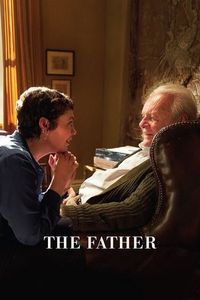
    The Father (2020)

    (Amazon Streaming, October 2021) Like many viewers, I saw The Father on the list of 2021 Oscar nominees, glanced at “Anthony Hopkins plays a man in the grip of dementia,” listened to the praise about Hopkins’ Oscar-winning performance and jumped to easy conclusions—this would be another Oscar-baiting sensitive drama about the ravages of aging, aping so many other movies in a similar vein. I’d get around to it, eventually and unenthusiastically. Well, that was a bad take because The Father is something else: a horror film in the guise of a drama about aging, a unique take on an overexposed prospect and a sure-footed blend of cinematography, acting, dialogue and direction in service of a unique film. This doesn’t mean you’ll enjoy it—but you won’t easily forget it. The key to The Father is that it dares try the impossible: showing the cognitive decline of dementia from the inside. It starts cleanly enough, as a daughter visits her father and explains how he needs assistance in his old age. A few matters are discussed and easily put aside as minor. But the weirdness escalates in subsequent scenes, as details don’t add up, people show up with different faces, the apartment decoration keeps changing, and we, as viewers, realize we can’t trust our own memories. The protagonist’s rationalization works overtime to convince him (and us) that this is all normal, but The Father is one of those films where you can’t trust the current moment without measuring it to everything that’s happened before or is about to happen. As the film advances, we realize we can’t trust its chronology, as past and future blend into the present in a jumble of things that have, have not, never did or haven’t yet happened. By the end, we piece together a very sad story of decline, hospitalization, abuse and regression. Hopkins is, as advertised, utterly terrific here—a great performance (in a career of great performances) that turns on several emotional dimes, and plays both to the moment and to what it may mean in the bigger story. Still, I’ll argue that the star here is playwright-writer-director Florian Zeller, in a film directing debut where even the smallest detail feels perfectly assured. Watching The Father is unlike any other film—you can’t trust your usual bearings and can’t coast on the assumption that the usual guideposts are trustworthy. It’s certainly not a fun film—but it’s quite a success in telling a depressing story in something approaching an exhilarating form.

  • Transsiberian (2008)

    Transsiberian (2008)

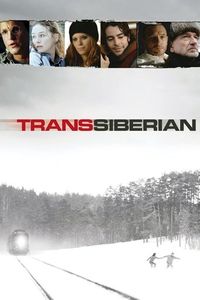
    (On TV, October 2021) Between cinematic strengths and weaknesses, there’s a whole spectrum of mediocre annoyances that will strike some viewers as trivial and others as irritants. So it is that while I’m not ready to condemn Transsiberian as a terrible thriller, it’s just annoying enough that I can’t bring myself to recommend it. Coming from the dark era of the late 2000s, where ugly cinematography was the rage, the film follows an American couple (Emily Mortimer and Woody Harrelson playing an intellectual) as it travels from China to Moscow on the Transsiberian railroad. Of course, it’s a thriller, not a travelogue, so before long they’re stuck with sordid travel companions, drug trafficking and a sinister police officer (Ben Kingsley, effective but clearly slumming it). The suspense is mildly effective, but the film plays a strangely divided game between this ugly, quasi-monochrome cinematography and a lurid storyline that’s about as far away from the grittiness of the visuals. The characters are annoying, and the film doesn’t help by turning them into bloodthirsty killers. A slow start saps initial goodwill, and an overextended finale clearly shows how much it has overstayed its welcome by that point. The train setting is familiar, but the film doesn’t seem to be using all of the opportunities at its disposal to crank up the tension and stick to some kind of spatial unity. Writer-director Brad Anderson’s filmography is incredibly inconsistent, going from the best (The Machinist) to the worst (The Vanishing on 7th Street) and it’s not Transsiberian that makes it any better or worse.

  • The Guardian (1990)

    The Guardian (1990)

    (Second Viewing, In French, On Cable TV, October 2021) Hey, I remembered seeing this film decades ago! Or rather, I remembered the insane climax in which the male lead takes a chainsaw to an evil tree (which bleeds blood rather than sawdust), while the humanoid avatar of the tree loses limbs while attacking the female lead and her baby. Yeah, The Guardian is quite a trip of a horror film: inspired by evil druids, it features an evil nanny with dark sacrificial plans for our protagonists’ newborn. Adapted from a novel, originally intended for Sam Raimi (which makes a lot more sense!), the film was eventually directed by veteran William Friedkin, who then went on to almost disavow the result. I’d say that it’s a slow burn, as the film gradually puts the pieces in place for its insane climax, but that’s not really true—not when the evil druid character is assaulted by three bikers who are then brutalized by trees taking revenge. But it’s true that The Guardian often runs on inertia, gradually revealing twists (such as the revelation that the new nanny is up to no good) that anyone half-paying attention to the film already knows. The Guardian is more of a curio than a good film (I mean, that climax…), but it does have the advantage of some distinctive elements to make it stand out from so many other duller horror films. The intrusion of nature (trees, wolves) in the supernatural is still not overused, and Friedkin being Friedkin, there’s a certain technical competence to the directing. Still, taking a look at the production history of the film makes for some wild reading, with the credit/blame for the film’s wilder elements going straight to Friedkin, as he modified a straightforward thriller about a baby-stealing nanny to a more memorable/crazy druid/tree premise. As a part of the filmmaker’s career, The Guardian is a wild oddity, and it’s probably best approached as such.

  • Gator (1976)

    Gator (1976)

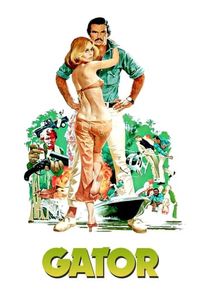
    (On Cable TV, October 2021) If you believe the theory that seeing actors direct a film allows you a deeper glimpse in the things that interest them, then there’s a near-perfect alignment between Burt Reynolds’ screen persona and his directing debut in Gator. Following up shortly after White Lightning with the same roguish character, Gator is an unapologetic southern crime adventure, featuring Reynolds as a moonshiner once more asked to work for the authorities. This time around, he’s asked to go investigate a famously corrupt county, using his personal connection to the local boss to gather information. Of course, it escalates: the local crime lords are worse than expected, the federal agent working with him is assaulted, the female journalist working with him is threatened and before long it’s down to a climax in which hero and villain smash through beach stalls in a rather impressive display of stunt work. (Reynolds being a former stuntman, the film does have a few amazing shots: a boat ripping through swamp houses, or a character jumping through the air as their vehicle flips over.)  The opening moments of the film take us to a very atmospheric swampland, and the overall feeling of being in a southern state permeates the entire film. Compared to more modern films, Gator meters its thrills in small doses—there aren’t as many car chases as you’d expect, or as there were in White Lightning. But it’s still a film built for thrills. Reynolds is reliably charismatic as a star, and not bad as a director—although the script’s uneasy blend of comedy and violence is not really smoothed over by the direction. Still, it is a mostly-lighthearted adventure set against an unusual setting: it’s memorable in itself, and probably best seen alongside its prequel.

  • Lorenzo’s Oil (1992)

    Lorenzo’s Oil (1992)

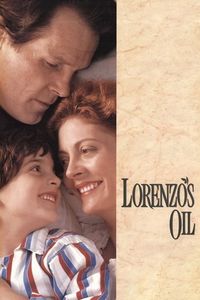
    (On TV, October 2021) As far as real-life stories go, the one behind Lorenzo’s Oil seems tailor-made for a movie adaptation. It’s about the dramatic high-stakes of a child being sick of a rare disease and gradually degenerating, with his parents trying to find any solution to make him better. But it’s also about the parents doing research, learning about the disease, coming up with ingenious solutions and finding ways to implement them despite formidable obstacles (such as synthesizing rare organic compounds) and shifting the scientific consensus despite opposition. You can see the elements that attracted writer-director George Miller to the film, and you can also see why it was essential to have a veteran, polyvalent director like him at the helm. What could have easily turned out to be a bland movie-of-the-week here turns into something more challenging, better-handled despite the potential for mawkishness. Not that the entire film escapes melodrama—whenever the kid is in obvious pain, Susan Sarandon emotes as the mom or Nick Nolte goes on a thickly accented rant, we can feel the melodrama being deployed. Still: tolerable. What’s not so much fun about the film is how it’s probably used as inspirations by deluded parents who are not being rigorous about their “research” and contest the facts—even the filmmakers acknowledged that Lorenzo’s Oil goes too far in its depiction of scientists as useless, and you can see how the film dismisses some truly valid questions by sole virtue of being aligned with the parents. Still, there’s some skill in the way it’s all put together, with evocative vignettes (such as the elderly chemist taking on the synthesis of a new compound as a personal challenge) adding much to the film. Of course, we now know a few things that we didn’t when Lorenzo’s Oil was released: Most of the characters have died since then (although the titular Lorenzo defied prognoses by dying at age 30, after improving thanks to his parents’ discovery) and the compound at the heart of the film is still under study as a preventative agent. The latest news has states mandating testing for the genetic ailment at birth so that preventative measures can be taken early. In that respect, Lorenzo’s Oil has aged much better than others promoting dubious cures. The key, which many will miss, is that the parents were indeed scientists and rational in how they approached the problem—they just had very different incentives from the establishment and (in real-life, if not the film) were able to work with them.

  • Boss Level (2020)

    Boss Level (2020)

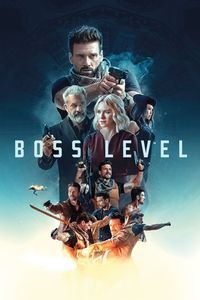
    (Amazon Streaming, October 2021) It’s been interesting to see time-loop movies making a comeback, but being shaped by videogame tropes rather than philosophical considerations. Explicitly taking us where Edge of Tomorrow suggested, Boss Level wallows in familiar videogame metaphors, as it shows us the protagonist’s attempts to survive a looping day in which a group of assassins is sent to kill him. Directed by Joe Carnahan (whose latest films inevitably end up delayed by years) and headlined by the dependable Frank Grillo, Boss Level proves to be an energetic Science Fiction action comedy in which much of the dark comedy comes from the protagonist taking a decidedly casual approach to mortality after 140 brutal deaths. Bloody rather than gory (although I’d like to see far fewer decapitations in my comedies—zero being the ideal number), this is clearly for older audiences. There’s a bit of a lull in the action once the initial rush of establishing the situation goes by, although the film’s third-act display of sweetness is definitely deserved. The conclusion probably could have been stronger, but there’s some inventiveness in how the film structures itself through repetitive actions and gradual progress. (It’s also fun to see Michelle Yeoh in any role, even small ones.)  Grillo’s been hovering near the edges of A-level filmmaking for a while and may get there if he keeps taking on such roles and doing a good job with them. Carnahan, meanwhile, continues to show why he’s one of the most undeservedly underused directors in the business, with another distinctive, funny, fast action comedy in the footsteps of Stretch and other distinctive films. Boss Level amounts to a fine action movie with enough SF and comic elements to make it worth remembering.

  • It Happened One Valentine’s aka Love Exclusively (2017)

    It Happened One Valentine’s aka Love Exclusively (2017)

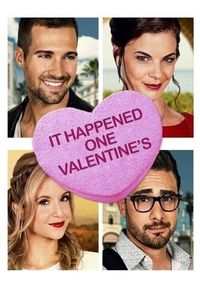
    (On Cable TV, October 2020) There’s not a lot to say about Love Exclusively, a very familiar romantic comedy set against Los Angeles music stardom. Our protagonist (Haley Webb) is the usual pretty-but-not-gorgeous brunette tailored not to threaten its target audience, playing a journalist with a personal history with one of the biggest stars on the film’s music scene. She gets the assignment to kindle a romantic relationship between that guy and another musical superstar, but the screenplay clearly has different ideas in mind. (Fortunately, the B-couple ends up being composed of the protagonist’s roommate and the other music star, so it all works out.)  Thanks to writer-director Jake Helgren, the expected plot elements are all there: the gentle romantic antagonism of the first act, the second-act attraction that both leads deny, the lies exposed late in the third act, and the everyone’s-happy conclusion. Don’t watch if you’re expecting anything interesting about the music business. At least the film is cleanly shot, with the colour of its Southern California setting reflecting well on the somewhat pedestrian direction. Clearly a Hallmark production, Love Exclusively is tailored to be an easy-to-watch romantic comedy (perhaps best suited for background watching, considering how empty it feels on a dedicated watch) meant to make audiences happy through obvious platitudes and a neatly wrapped-up romance. Not great, not good, not bad.

  • Fools’ Parade (1971)

    Fools’ Parade (1971)

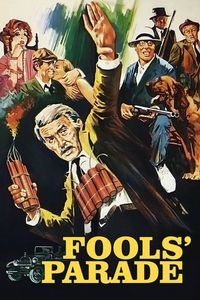
    (On Cable TV, October 2021) A surprisingly older James Stewart anchors Fools’ Parade, a Depression-era comic thriller in which a just-released ex-con with a sizeable check in his pocket gets involved in a number of adventures to protect his hard-earned money. Playing with his usual drawl, good-natured persona and exaggerated squint (the character is missing a glass eye), Stewart does have some company in the cast: It’s a shock to recognize a young Kurt Russell in a supporting role (meaning that you can jump from 2021’s The Fast and the Furious 9 to 1936’s Rose-Marie with this one degree of separation), or have George Kennedy play the heavy. It’s billed as a comedy for obvious reasons—it ends well, for one thing, and there’s one sequence that ends with a surprising bang—but the tone is not always jolly. Clearly shot in the muddy 1970s, it’s a film drowning in browns and blacks, which does take away from a comic atmosphere. Still, it’s reasonably entertaining: Where else can you watch Stewart with sticks of dynamite strapped to his body, genially threatening to blow up the bank if his reasonable demands aren’t met? As you may guess, Fools’ Parade doesn’t quite fit together: a bit too sombre for pure comedy, and too comic for pure thrills. But it does work, largely thanks to Stewart being so effortlessly watchable.

  • Kenny Rogers as The Gambler (1980)

    Kenny Rogers as The Gambler (1980)

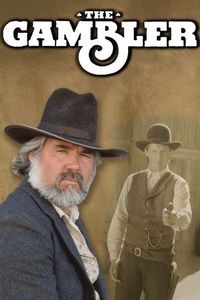
    (On Cable TV, October 2021) Whenever you hear someone bemoaning how Hollywood is making movies out of silly things (a comic book, a board game, a toy), gently remind them that The Gambler was adapted from a song popularized by Kenny Rogers, and that it’s not a bad movie at all — in fact, it’s a great portrayal of Rogers at his most charismatic. Nearly everyone of a certain age can hum the chorus of the song: “You’ve got to know when to hold ’em, know when to fold ’em, Know when to walk away, know when to run,” and those who can’t surely will after seeing the film, because it’s still a first-grade earworm. Much of the film follows the song, as a naïve card shark (Bruce Boxleitner) is mentored by an older man (Rogers) who has seen it all. The younger man simply wants to play cards for money; the older is on a mission to reunite with his ex-wife and his estranged son. Much of the story takes place aboard a train or near its stops, giving some implicit forward momentum to the story. Even those who aren’t fans of westerns will appreciate how the script uses tropes of the genre in a way adapted from card-playing, with bluff and odds-counting being integral parts of the shootouts and dramatic scenes peppering the story. Still, the best asset of The Gambler remains Rogers himself, immensely likable with his calm jaded demeanour, soft-spoken voice and glorious beard. He’s not a good actor (the edges of his acting talent wear thin in some scenes) but you can’t help but like him. It’s a shame that The Gambler, which features some surprising cinematography for a made-for-TV production, was shown on TCM in such poor image quality that some sequences seem to come from a sepia-toned movie. Still, that’s not quite enough to make anyone walk away from a surprisingly entertaining western that cleverly weaves in the themes of its inspiration.

  • Trucks (1997)

    Trucks (1997)

    (In French, On Cable TV, October 2021) Oh, this is just stupid. Look: I’ve read shelves full of Stephen King books. I’ve seen nearly all of the movies adapted from his work and can run his filmography forward and backwards. I’ve been aware of movies for decades and semi-religiously reviewing since 1997. And yet until today, despite recording the film on my DVR and having it sit there for six months, I was unaware that King’s short story “Trucks,” which led to Maximum Overdrive, also led to the latter Trucks. This is really weird and can only be explained by selective memory, an amazing set of oversights and the fact that Trucks is nearly forgotten today. There’s a good reason for that. Made for television (hence flying under the radar of moviegoers in a pre-streaming era), Trucks makes a series of artistic choices that, in nearly all cases, lead to a superior film than Maximum Overdrive… and yet fail to hold our interest like the first film did. The answer to that mystery is counterintuitive. Even the kindest, most objective observers will note that King spent much of the 1980s in a haze of fame and cocaine (having been in such a state that he doesn’t even remember writing some novels). At the height of his first bubble of fame, he was offered the directing job for Maximum Overdrive and, in coke-fuelled insanity, proceeded to make an utterly ridiculous film that never stopped to question whether what it was doing was sane or logical. The result is a film that’s both terrible and hypnotically fascinating. No one thinks that Maximum Overdrive is a great movie, but they remember its insanity and love it for its excesses. So when director Chris Thomson took on Trucks and set out to make a more serious adaptation of a skimpy short story, a lot of competent people made very competent decisions. They gave a serious spin to the production to make it an outright horror film rather than a comedy. They hired better actors who could deliver the serious lines. They followed seasoned screenwriters’ advice and got relatable characters. They relocated the action to the American southwest to make it visually distinctive. And they utterly forgot one point: sentient evil trucks are a fundamentally stupid idea. It doesn’t work. It’s inane and crazy. So, in making a more respectable horror film out of “Trucks,” they completely exposed the futility of ever trying to turn the story into something halfway respectable. Worse: in not being able to fully realize their vision (thanks to limited budget, lack of imagination, and lack of daring), they ended up with a thoroughly mediocre product that leaves no lasting impression. Oh, there are other problems with the film: the characters are from stock, the directing is pedestrian and the insertion of gory sequence makes no sense (the Tonka truck killing someone? It’s like trying to put some Maximum Overdrive in a film that’s not built for that speed. Oh, and the axe murder has me asking if the masked figure was a truck in disguise.)  So that’s what you get: Trucks is a marginally better film that’s somehow not as good as its demented predecessor. That makes just about as much sense as me not knowing about the film’s existence.

  • Evil Ed (1995)

    Evil Ed (1995)

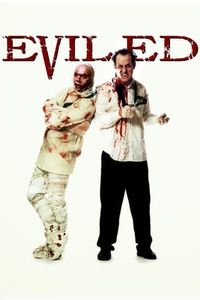
    (On Cable TV, October 2021) Hang around the horror scene too long and you’ll start noticing the dark streak of humour running throughout its fandom. The humourless scary horror fan is rare—most have a healthy dose of ironic self-deprecation in their appreciation of the genre. They know it’s fake, off-putting, and repellent to the mundanes and that’s part of the fannish identity. That probably explains the strong subgenre of gory comedy made by and for horror fans. Evil Ed is definitely one of them—taking on a mild-mannered film editor driven mad by editing gory horror film, it eventually becomes the kind of film that it spoofs in its first half. The fake horror films re-edited at the beginning of Evil Ed are so ridiculously over-the-top that they evoke comedy on top of horror—but they still evoke horror. Unfortunately, I’m not a fan of gore at all, so that aspect of the film eventually falls flat and there isn’t much non-gore comedy to make up for it. Despite some good ideas from writer-director Anders Jacobsson, Evil Ed feels like a horror comedy made for far more extreme horror fans than I am. The ironic aspect of horror films actually turning someone violent is not lost on me, but I wish it was used in the midst of a better movie.