Month: October 2021

  • True to the Game (2017)

    True to the Game (2017)

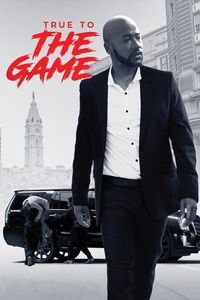
    (On TV, October 2021) Eh, what a mess. There’s something very familiar to much of True to the Game, as a young woman falls for a bad-boy drug dealer and gets caught in the crossfire when gang wars turn hot. But it’s in the way it’s put together than the film loses points. Erica Peeples is not a particularly likable pick in the lead, and her annoying, materialistic self-entitled character (who’s supposed to be super-smart—go figure) does no one any favour. You can literally point at any other actress in the film (even veteran Starletta DuPois!) and say, “I’d like her better as the lead.”  Columbus Short is slightly better as the drug lord (supposedly trying to go straight, which lasts maybe five minutes), but he’s ill-served by the demands of the script. Speaking of script, well: people get gunned down on a regular, almost predictable schedule, and the women sitting next to their targeted boyfriends don’t fare any better. I remain puzzled by the film’s message, because in between the usual “if you run with gangsters, you’ll get shot” theme, it seems curiously comfortable with the protagonist living off what she knows is blood money. I know, I know: fantasy wish-fulfillment, etc., but it’s still dumb. The direction is indifferent, the photography is flat, and there’s scarcely any reason to keep watching the film as it gets dumber and more amoral. (By the time the lead character is arguing with an executor about a house that belongs to someone else, we’re firmly in the “self-absorbed brat, please” camp.)  It’s just a clumsy film without much of an idea where it’s going, or how to get there. Learning that True to the Game is based on a self-published novel explains quite a lot, except why many people thought that this was just fine as a movie. (Even worse: it has spawned two sequels, which I’ll eventually see because I can’t help myself.)

  • The Affairs of Annabel (1938)

    The Affairs of Annabel (1938)

    (On Cable TV, October 2021) I’m always a good sport for Hollywood-insider movies, especially from the 1930s. But The Affairs of Annabel tested my patience. I didn’t hate the film—I just found that it failed to work. I can see the jokes, I can appreciate a young Lucille Ball looking good and playing for laughs, I appreciate the film’s admirably short 68-minute running time and I’m appreciative as always at the time-capsule funhouse look at Hollywood of past decades. But it just doesn’t work. I’m left unmoved by the shenanigans of the young star protagonist and her publicist as they stage elaborate stunts. The Hollywood satire seems toothless, and the character’s mugging for the camera (specifically Jack Oakie) is more annoying than successful. I’ll allow for some mood-related variance here—maybe it would be funnier if I was in a better mood. But as it stands, it’s going to take a while before I revisit The Affairs of Annabel.

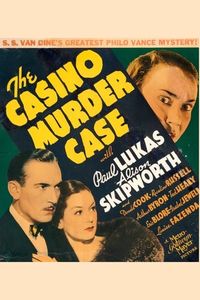
  • The Casino Murder Case (1935)

    The Casino Murder Case (1935)

    (On Cable TV, October 2021) Hmmm. When I said to myself that I’d watch the Philo Vance series, I did so after watching a William Powell Vance, not a Paul Lukas Vance. The Casino Murder Case (which features far less of a casino setting than you’d think) is a decent but not overly impressive murder mystery, as foppish detective Vance goes around collecting clues that the police has missed. There’s poisoning, recalcitrant witnesses, candies, fake-outs and characters obsessing over the properties of heavy water. Lukas is disappointing as Vance, hitting the worst notes of the character without quite managing to let the best come out—Rosalind Russell is better in the lead female role, but not that good due to the limitations of the part. The plot itself is rather dull, with the comedy only hitting in brief spurts. The Casino Murder Case amounts to a somewhat mediocre example of 1930s murder mystery in a light vein: not unwatchable, but hardly worth as much attention as other examples of the subgenre.

  • Une heure de tranquillité [Do Not Disturb] (2014)

    Une heure de tranquillité [Do Not Disturb] (2014)

    (On TV, October 2021) There’s an admirably compact aspect to the central idea of Une heure de tranquillité, as a middle-aged music lover finds a beloved album in a record store and heads home to listen to it in peace. Alas, this won’t be—an incompetent contractor has started work tearing down the walls of his upscale Parisian apartment, his wife has a marriage-shattering secret to tell him, his rebellious son brings in immigrant refugees, and one of his psychiatric patients is hounding him, threatening to expose their affair. Adapted from a theatrical play by playwright Florian Zeller himself, Une heure de tranquillité spends much of its first half setting up its conflicts, and the second half detonating them. The result can be very funny: the protagonist being so self-absorbed and intent on listening to his album, the revelation that his son has been fathered by someone else barely registers—or rather acts as a comfort considering how much he dislikes his son’s simpleminded activism. Other moments don’t work as well (anything to do with his mistress seems wasted, for instance) but the tone remains amiable throughout. The film’s concluding irony is that the character gets to listen to his album only when he lets go of the idea of doing it alone. It wraps up nicely: Une heure de tranquillité may have too many small annoyances and unlikable characters to fully register as a great comedy, but it’s pleasant and amusing enough to be worth a look.

  • Scissors (1991)

    Scissors (1991)

    (On Cable TV, October 2021) There are roughly 45 minutes of an intriguing film in Scissors; alas, it leads to 45 minutes of a much worse film. Feeling a lot like a mellow de Palma film, it’s a psychological thriller (aka—weird stuff, not physically impossible) revolving around a young woman who gets assaulted in the elevator of her apartment, then sees things get truly weird. Talking to her psychologist doesn’t help much; speaking to her neighbours doesn’t help much (especially when one of them is definitely stalking her) and the strangeness doesn’t abate. Sharon Stone, in one of her pre-stardom roles, is actually quite likable as the eccentric lead even if it’s not a right fit for her later screen persona. The film is intriguing until it hits the midway part and abruptly switches gears by locking up its protagonist in a nightmarish apartment filled with animated objects, unsettling reminders of her past traumas and… a dead man, the same one who assaulted her in the elevator. Abruptly changing to a lock-up thriller, Scissors becomes less interesting and subjectively much slower-paced. It picks up again toward the end, as the explanations are given and our protagonist gets one final opportunity to strike back. While the film wants to be odd and unsettling, it settles for mere weirdness—director Frank De Felitta is not particularly gifted and his control over the results degrades the longer Scissors goes on. In the end, a potentially intriguing film has degenerates into mere mediocrity, barely worth remembering.

  • Schizoid (1980)

    Schizoid (1980)

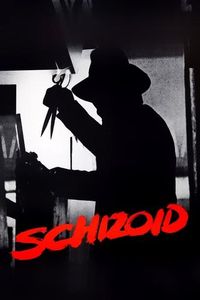
    (On Cable TV, October 2021) There’s a long list of reasons why I loathe slasher movies, with gore and nihilistic disregard for human life being near the top of the list. But the inherent misogyny of the genre, especially in its first flash of early-1980s popularity, is right up there with the worst. It’s always young women being targeted, with the desecration of their bodies being integral to the murders. Schizoid, while better than many other slashers from a narrative perspective, is harder to excuse when it comes to violence directed at women: the targets are older, they’re not necessarily a cheerleader squad and the identity of the killer underscores its misogyny badly enough. From a narrative point of view, Schizoid has a few more things going for it than the usual summer camp bloodbath slasher: As a psychiatrist receives threatening letters and sees members of her therapy group being murdered one by one, she wonders: who’s the murderer? Could it be… creepy Klaus Kinski? Well, maybe—terribly miscast as what’s supposed to be an irresistible senior psychiatrist, he rings off red herring alarms the moment he walks on the screen. Could it be… creepy Christopher Lloyd as an unhinged handyman? Well, maybe—except how about that weird teenager with an axe to grudge against the protagonist? There are plenty of possibilities and Schizoid, once it moves away from the gruesome murders, does have some interest as a whodunnit. Alas, it does remain a slasher and not a particularly well-handled one. Whatever attempts at giallo style are there fall flat and there’s not much more to compensate. Kinski is a presence by himself, but Marianna Hill is merely beautiful-but-bland in the lead role. I’ll tolerate Schizoid as being slightly better than the average slasher, but that’s not a very high bar to begin with.

  • Topper Takes a Trip (1938)

    Topper Takes a Trip (1938)

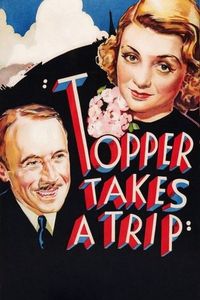
    (On TV, October 2021) Picking up right after the first Topper (but negating its reconciliation conclusion), Topper Takes a Trip foregoes Cary Grant but keeps the rest of the cast, as banker Cosmo Topper and his wife are once again at odds and she decides to leave for France during a temporary separation. This won’t do, decides the flirtatious friendly ghost of the first film (Constance Bennett, given that Grant has presumably ascended to heaven) as she sets out to reunite the bickering couple. As with the first film, the emphasis remains on silly, often improperly justified comedy, as ghosts materialize or appear without much consistency in their powers. The important part is taking in the gags and having the Toppers reunite at the end. Roland Young and Billie Burke are not bad as the Toppers, but they clearly play second fiddle to Bennett. Topper Takes a Trip is a fairly weak brew as far as comedies go, but it’s unquestionably a follow-up that steps into the shoes of its predecessor. I liked it without loving it—it’s reasonably fun, but not that good nor that funny.

  • Jekyll & Hyde (1990)

    Jekyll & Hyde (1990)

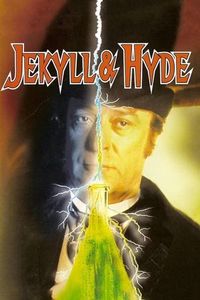
    (In French, On Cable TV, October 2021) If you’re looking for the biggest distinction between the 1990 TV movie’s take on Jekyll & Hyde when compared to other versions, the best I can offer you is Michael Caine in the lead roles. It makes sense that actors would regularly want to measure themselves up against one of the most famous dual roles in classic literature—some have gone for heavy makeup, others just acting to distinguish both alter egos. This version, made for ABC television network, is nicely executed: the production values are strong, Caine is having a lot of fun in bladder makeup and the perverse romantic angle is juiced up. It’s psychologically developed to the 1990s standards of TV filmmaking and showcases an interesting angle on the usual story. It’s important to note that, at this point, I don’t evaluate Jekyll & Hyde movies on their individual basis as a vehicle for the story: I’m more interested in how they differ from other takes, or how the actor distinguishes himself from the tradition set by Barrymore, March, Tracy and others. This one certainly isn’t perfect: timid in some areas, too wild in others (that ending stinger is just silly). But Caine as Jekyll and Hyde? Worth seeing.

  • Da 5 Bloods (2020)

    Da 5 Bloods (2020)

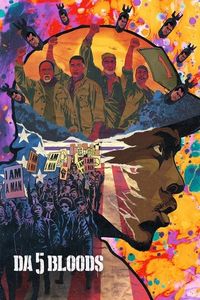
    (Netflix Streaming, October 2021) Don’t misunderstand me when I say that Spike Lee could have had an exemplary career as a pure entertainment filmmaker: He’s one of the most vital voices in American cinema and he wouldn’t be Spike Lee without constant engagement on social issues. But as many entries on his filmography suggest (25th hour, Inside Man, Oldboy), he could have made it solely on technical competence in delivering entertaining films. But his special genius lies elsewhere, in combining this entertainer’s instinct with works of social import. His latest two films, BlacKkKlansman and Da 5 Bloods, end up being among the best of his career in blending accessible narratives with pointed social issues. His latest film begins with exactly the right interview snippet: Mohammed Ali discussing how “I ain’t got no quarrel with those Vietcong,” thus putting the central idea of the film right up there: why would black soldiers serve a country that marginalized them so much? The way to illustrate this tension goes through a hard-to-resist premise: what if American soldiers went back to Vietnam fifty years later to find the remains of their commanding officer… and a crate filled with gold? The early moments of Da 5 Bloods present themselves as something of a romp, as our elderly veterans (led by Delroy Lindo) take in the sights of a westernized Saigon and head over to their adventure. But pay attention to the flashbacks and the foreshadowing about landmines because the film becomes darker in a single moment and its second half is a far more thrilling contemporary adventure in which, as usual, finding the gold isn’t nearly as difficult as keeping it. Jean Reno has a small but enjoyable role, while Chadwick Boseman makes a remarkable appearance (one of his last) and Hollywood newcomer Sandy Hương Phạm provides a remarkable emotional linchpin to the film. It gets overly violent at times (even though: hey, it’s a war film) but engrossing throughout even as it switches gears as it goes on. It’s a really good film, and doesn’t skimp on the American racial divide either. Da 5 Bloods is another success for Spike Lee, who seems to be getting a second or even third wind as a filmmaker.

  • A.rtificial I.mmortality (2021)

    A.rtificial I.mmortality (2021)

    (On Cable TV, October 2021) As someone who once wrote an entire (bad, unpublished) novel about transhumanism, personality uploads and runaway artificial intelligence, I had to have a look at Canadian documentary A.rtificial I.mmortality. The film follows Toronto-based director Ann Shin as she, contemplating the cognitive decline of her father, sets out to investigate the latest in creating artificial personalities, by feeding it key documents of one’s life, numerous writings, 3D scanning and such. Philosophical implications are lightly touched upon, as Shin attends transhumanist church services, promising start-ups and electronic shows. If the technology still feels clunky, incomplete and unconvincing, keep in mind that it’s already progressed to the point when this stuff isn’t solely the domain of science fiction. Shin (a likable presence doing much to humanize her topic) interviews an avatar of Deepak Chopra, unveils her own avatar to her kids (who aren’t impressed) and talks to luminaries in the field. It’s both impressive and lame at once—cutting-edge stuff far ahead of what was possible even a few years ago, and still so unconvincing as to make anyone wonder why we bother. But you have to take the long-term view. By happenstance, I ended up watching A.rtificial I.mmortality right after 1983’s documentary Sans Soleil, which took in the state of early-1980s personal computing with awed wonderment, and the juxtaposition between the two did much to put this latest film in perspective: It’s all a bit laughable today, but just wait thirty years and we’ll talk again. In the meantime, the film is a decent introduction to the latest thinking in the field, and the way it bandies about “mind file” as a real thing had me wondering what this very website (with thousands of reviews and millions of words of opinionated personal content) may mean in terms of legacy. Of course, to update an old Woody Allen joke, I don’t want to achieve immortality by being re-created through my writing as a synthetic personality in a distant future—I want to achieve it by not dying. Until then, well, A.rtificial I.mmortality will serve as a marker of where we were in 2021—our achievements, hopes and fears in the matter. Maybe it’s time for me to write another novel on the topic…

  • Sans soleil [Sunless] (1983)

    Sans soleil [Sunless] (1983)

    (On Cable TV, October 2021) The personal essay is a form of documentary filmmaking that was relatively rare, often pretentious, but fascinating when done well. Such things are far more common nowadays with YouTube (where it’s often all opinion masquerading as fact), but in 1983 you had to have some financial backing to go to foreign destinations and deliver what’s essentially a travelogue mixed with random thoughts stemming from the trips. Let’s face it: much of writer-director Chris Marker’s Sans Soleil is almost unbearably self-absorbed, commenting on foreign cultures by using dodgy expressions and an outsider’s perspective. There’s some banal material passed as deep thoughts, and some moments that probably only made sense to Marker alone. But there are some better moments as well—an interesting discussion of Vertigo, or an amazed look at circa-1983 computer technology that anticipates many of the subsequent debates about our relationship to computers. (By coincidence, I happened to follow Sans Soleil with an up-to-the-moment look at Artificial Immortality, and one did much to inform the other.)  It would be an exaggeration to say that I liked Sans soleil, but it is an unusual video essay that often finds a fascinating streak.

  • An American Tail: Fievel Goes West (1991)

    An American Tail: Fievel Goes West (1991)

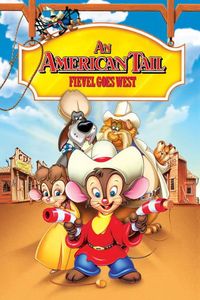
    (On Cable TV, October 2021) After taking on the classic immigrant experience in An American Tail, the sequel goes after another piece of Americana in sequel Fievel Goes West. As the title suggests, the Mousekewitzes decide to head west after getting tired of the limited opportunities in New York City. As in the prequel, their journey finds young Fievel separated from them, learning valuable life lessons along the way. Taking on familiar western tropes with more enthusiasm than innovation, Fievel Goes West seems content to follow a very classical way of making animated movies, with plenty of songs and dances to go around. Some of the musical numbers are not bad: I’m particularly fond of the short “Rawhide” sequence. Some celebrity voices are also ear-catching: John Cleese turns in a fun villainous performance, while James Stewart’s unmistakable drawl is here heard for the last time. It’s family entertainment in a comfortable old-school mould, perhaps a bit more superficial and fast-paced than other similar films, but clearly having fun with the conventions of westerns. Fievel Goes West feels less profound but more fun than its prequel, which will strike some as ideal and others as a step down.

  • The Farewell (2019)

    The Farewell (2019)

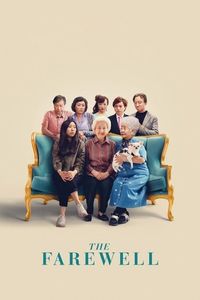
    (In French, On TV, October 2021) As I’m mentioned elsewhere, the best thing about the 2010s trend toward more inclusive filmmaking is getting those stories we wouldn’t have had otherwise. Stories like The Farewell, in which a young aimless Chinese-American goes to China for a wedding over her family’s objections. The issue is that the entire family is invited, but they don’t trust her not to keep a family secret: that the matriarch of the family is dying of cancer, and the entire family has chosen to keep the news from her. Featuring a completely de-glammed Awkwafina in a demanding role, the film initially does run on a core engine of suspense: will the protagonist be able to keep a secret from her dear grandma or not? But then, before we know it, we’re deep enough in family dynamics, exploring Changchun, learning why Grandma is so special and getting a lesson in Chinese collectivism. Despite a good dramatic turn for Awkwafina, it’s Zhao Shu-zhen who steals to film as a Chinese matriarch. The universality of The Farewell is impressive—despite the foreign nature of the film’s surroundings, it’s easy to empathize with the complex family ties at play here. It’s not a particularly fast-paced film: some shots drag on, much of the material is repeated and there isn’t much of a plot to speak of. But that’s fine—The Farewell is a different kind of film, and one that’s best taken in rather than actively watched.

  • Safer at Home (2021)

    Safer at Home (2021)

    (On Cable TV, October 2021) Despite what follows, I approached Safer at Home with the best intentions—I did! As of mid-2021, we’re hardly done tackling the COVID-19 pandemic in film format, and immediate takes such as this one can be helpful in capturing the madness of the moment. I’m also quite willing to entertain experiments with the film form, even if this means, for now, a spate of films inspired by videoconference calls. As Safer at Home begins, we’re clearly not meant to stay in the moment: A year or two from now, as an incredibly deadly “COVID-22-C” variant takes out millions of people per day, our characters are in their third year of lockdown, forced to celebrate their annual Vegas get-together virtually. Naturally, these bright lightbulbs conclude that the best way to do this is to simultaneously take a new experimental drug from Japan. If you’re thinking that this won’t end well, you have no idea—and you’re about to find out that “won’t end well” also applies to the film itself and not just the events happening within it. As mentioned, our characters aren’t the smartest teleworkers around—a trivial admission of a past sexual experience gets a couple arguing and by the time our other characters are retreating to the bedroom, bemoaning the drug trip or being distracted, one character is lying lifelessly on the floor and another one is protesting that he didn’t do anything. Rather than doing the sensible thing (or even any sensible thing), one dull-witted character goes running off in the streets, breaking curfew and attracting police attention but never ever turning off his cell phone screen even when it’s bathing him in light as he tries to hide. The rest of Safer at Home just keeps getting dumber and dumber, ending with a hysterical climax of police brutality that almost feels deserved as a consequence for being such morons throughout the entire film. What began as a semi-comic take on the pressures of confinement just turns stupider every five minutes, until we’ve completely lost sympathy for everyone involved and especially the guy who dies at the end. (Well, I did like Alisa Allapach’s performance, but she’s got the plum cuter-and-smarter role in a weak ensemble cast.)  Even the “twist” at the end can be seen long in advance. A lot of material is left untouched here, whether it’s the collective grief of a nation having lost 10% of its population, or the much-vaunted “drug trip” that doesn’t do much, or the impact of an oppressive police force. I still think Safer at Home had potential, but the dim-witted way writer-director Will Wernick goes about steadily wasting its potential is not the way to go.

  • Dreamkatcher (2020)

    Dreamkatcher (2020)

    (On Cable TV, October 2021) Trite, dull and indifferently executed, writer-director Kerry Harris’ Dreamkatcher is low-budget horror at its most unremarkable. A story of a mom at odds with her new step-son while he’s under the influence of demonic possession, it’s not a story without promise, but it wastes it all in muted execution. The possessed child angle is not without a few mild shocks, but they disappear in a series of plot holes, unlikable characters (what kind of dad leaves his girlfriend and son alone together for days when there’s clearly no trust there?), slow pacing and unconvincing moments. Horror favourite Lin Shaye has a walk-on role as an expert on the occult, but it’s not very well handled and feels like an inept attempt to raise the film’s profile by leeching off her Insidious fame. At least I’m reasonably confident that I’m going to forget all of Dreamkatcher within days.