Book Review

  • Pushing Ice, Alastair Reynolds

    Pushing Ice, Alastair Reynolds

    Gollancz, 2005, 457 pages, £14.99 hc, ISBN 0-575-07438-8

    My traditional objections to Alastair Reynolds’ fiction have been twofold: First, too many of his novels take place in a single future history that gets increasingly less interesting. Second; far too many of his books are overwritten to the point of tediousness. The rest of his work is pretty good, but endless Inhibitors stories still make up more than half of his bibliography. Fortunately, his most recent books have taken steps against the issue, either tackling new futures, or coming in under 350 pages. Pushing Ice is halfway OK: It’s still far too long, but at least it offers something new. Not coincidentally, it’s almost the best thing that Reynolds has written so far.

    It starts twice in ten pages: first, in a distant future where humanity has conquered hundreds of solars systems. Then, again, in 2057 as a plucky crew of comet-mining operatives is hired to go and check out Janus as it runs away from Jupiter. But accidents keep happening, and before we know it the crew of the Rockhopper crash-lands on Janus as it accelerates away from the Solar System. From near-future hard-SF, Pushing Ice turns into a high-tech Robinsonade, then other even stranger configurations as relativistic effects take hold. The structure of the novel is such that the prologue ends up not merely being a framing device, but a plot arrow whose impact is felt two-thirds of the way through.

    For experienced SF readers, one of the best things about Pushing Ice is the way it pushes through the future, taking us from a relatively conventional hard-SF setting of blue-collar space work to the exotic weirdness of a far future shared with a variety of alien species. The structure of the story is such that there are quite a few chills in recognizing future technology delivered, almost as an afterthought, within the hands of human characters still recognizably like us.

    That set of characters is uneven, but they have their moments of infighting. Decisions made by characters in position of power have consequences that go beyond immediate repercussions: Over and over again, the Rockhopper crew reacts, takes sides and argues about their fate, trying to survive despite what they receive as leadership failures. The novel eventually switches focus entirely as one character is taken out of service and replaced by another. Bit players come and go, sometimes in fairly gruesome fashion: Reynolds has never been known as a particularly light writer, and if Pushing Ice isn’t as relentlessly gloomy as his other work, it’s still heavy-going at times, pulling plot dynamics out of interpersonal clashes and the cyclical nature of entire civilizations. Betrayals happen so often that it’s a wonder anyone trust each other by the end of the story. (…and they don’t entirely do.)

    Where Pushing Ice could have been better is in tightening up the screws: There’s a tremendous amount of nothing-happening within these near-500 pages, and the well-worn nature of Reynold’s ideas (big, but hardly innovative) are such that the novel could have been written in more or less the same way at any point during the past thirty years: But Pushing Ice as published in the 1980s would have been considerably shorter, and the pace would have accelerated through the story, not dawdled along unevenly like it does so often here.

    But Pushing Ice does manage to make me more receptive to Reynolds’ most recent and upcoming novels. (Much as his short-story collection Zima Blue proved that he was at his best when writing shorter fiction not set in the Inhibitors universe.) I’m not going to give up on the Reynolds two-strike rule, but as soon as something either short or standalone comes up, I’ll let you know.

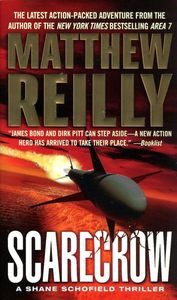
  • Scarecrow, Matthew Reilly

    Scarecrow, Matthew Reilly

    St. Martin’s, 2003 (2005 reprint), 464 pages, C$9.99 mmpb, ISBN 0-312-93766-0

    Let me tell you why I love reading Matthew Reilly’s novels.

    Since an image is worth a thousand words, picture this: Ottawa in mid-February. A meter of snow everywhere, ice on the ground, snowflakes in the air, fierce wind whipping the countryside. Then focus on an infrequent bus, stained with salt, windows fogged with its passengers’ exhalations, plowing through the storm thanks to an aggravated driver whose schedule has already been smashed by the weather, out-of-synch traffic lights, bad pavement and passengers who don’t know how to behave. Now enter the bus and try to find a place in the middle of a crowded space, alongside surly teenagers, glum federal public servants, depressed shift workers and overburdened students. The noise is a monotonous mixture of wind, pavement cracks, coughs, sniffles and regular stop calls. One person, squeezed in-between two grossly overweight passengers, is smiling. Of course, he’s reading a Matthew Reilly thriller.

    What you’re not seeing is that at that point in the novel, barely fifty pages in, top operative Shane “Scarecrow” Schofield has just escaped a crumbling high-rise by grappling onto a Harrier-like jet. The building hides a top-secret Soviet ICBM launch complex, Schofield has a $18.2 million dollar bounty on his preferably-severed head, bounty hunters have decimated the rest of his Marines and there’s a Typhoon-class nuclear submarine hidden nearby.

    This, my friends, is high-class escapism.

    Some commuters read romance, some read fantasy, some read science-fiction, some read murder mysteries —and some read them all. But give me a slick over-the-top technothriller, and I won’t even care if it takes twice as long to go to work or get back home: As long as I’m reading, I will barely be on the bus.

    This being Reilly’s fifth novel, it’s got a track record to follow. Fortunately, Reilly amps up the action to ever more frenetic levels, not forgetting to throw in a few spectacular scenes (such as an aircraft carrier blowing up), fast cars, high-tech weapons (such as Metalstorm rifles), fake deaths and nick-of-time escapes. Not to mention a bare-knuckles fist-fight between two series regulars. By this time in his series, he can count of his reader’s familiarity with his tricks to build punchlines or gut-punch readers who expect something else. A recurring character dies here, but on the opposite end of the spectrum, there’s a really funny moment during which a character tries to emulate Schofield’s recurring mag-hook trick, only to find out that it doesn’t work… and then scream that this sort of thing never happens to the Scarecrow.

    But one thing’s new this time around, and it’s thematic framework that underlies the action. While Reilly gets a lot of juice from his bounty-hunting antagonists (one of which is certain to make a return appearance in upcoming novels), he ends up providing his novel with an apocalyptic “third world against first world” justification that hints at greater degrees of political sophistication. But don’t make too much of it in Scarecrow, though, because most of it is jettisoned as soon as the last act rolls in.

    But once the smoke has cleared, it all adds up to an unusually satisfying thriller experience. Reilly has mastered thriller writing not only in delivering the good to his readership, but doing in a way that practically absolves him of any criticism: Of course, his premises, means, justifications, characters, and plotting don’t sustain comparison with the real world; what’s your point? The real thrill here is in seeing a skilled craftsman plays magnificently with the tools of his trade. It’s beautiful, impressive, and completely absorbing. If ever you see me reading a Matthew Reilly novel on the bus, please don’t disturb.

  • The Enemy, Lee Child

    The Enemy, Lee Child

    Dell, 2004 (2007 reprint), 464 pages, C$10.99 mmpb, ISBN 978-0-440-24101-0

    Every Jack Reacher thriller is slightly different, and The Enemy‘s claim to distinction is obvious from the second page: It’s 1990 again, and Reacher is a Military Policeman on duty as the world changes decades. Elsewhere in the world, Germany is tearing down the Berlin Wall, and American forces are chasing Noriega in Panama. But those concerns quickly become secondary to Reacher as he’s put on his first case of the year: The murder of a general in a motel where rooms are rented by the hour.

    This looks bad, but it quickly gets worse after Reacher starts digging: The General’s wife is violently killed hours after the death of her husband, and more victims drop dead as the novel advances. Reacher, clearly, has a lot of work to do, which is all very curious since he’s just been transferred to his post. But that’s only the tip of the iceberg, as he discovers that he’s hardly the only MP to have been moved around in the past few days…

    As a gimmick, the old prequel is fast becoming a favorite of writers of all stripes. It gives a chance to reset the clock, see the character in classic top shape, and provide cute nods for series fans as they get cameos from series regulars. The Enemy is no exception, but as you may expect from a Lee Child novel, it also has the decency to provide a solid story along the way.

    For Reacher fans, The Enemy‘s most compelling aspect is to see Reacher in his element, firmly entrenched within the army, and at a level where his investigative skills can be brought to bear on interesting issues. Life within the US military is completely different from civilian life, and Reacher knows all there is to know about it. He’s in a position of minor power, with an assistant and a lot of leeway on how to do his job. But Reacher is always at his best against obstacles, and the massive reorganization of Military Policemen around the world also means that he’s got a new boss, and that his superior doesn’t seem all that competent. In fact, he pretty much orders Reacher to shut the investigation down, something that does little to stop Reacher. By mid-book, Reacher is essentially acting rogue, trying to pierce together the pieces of the puzzle before running out of time.

    But the very-early 1990s are also a tough period for him: His mother isn’t doing so well, and it’s an excuse for Reacher to go visit her in France, along with his brother Joe. Before the end of the novel, Reacher will learn a few troubling things about his own lineage.

    As with all Reacher adventures, The Enemy is a gleefully enjoyable mixture of procedural details and structural misdirection. It’s also one of the purest mysteries that Reacher has had to investigate so far: Despite the thrilling tank battle that marks the conclusion of the story, this novel is a straight-up investigation. The ramifications and reasons for the crimes Reacher is investigating go high up the hierarchy of the Army, but the investigation is a mixture of police work, tenacity and pure luck.

    It goes without saying that it’s also delivered with some of the cleanest, most compelling prose in the entire thriller genre. Child is a best-selling professional, and The Enemy is a pure delight for fans and neophytes both. While newcomers to the Reacher series will be able to get by, those who have read the rest of the Reacher books will recognize a few familiar names, and there’s a good chance that The Enemy has seeded a few more familiar faces that we’ll see in the next few Reacher adventures.

    As always, it’s tough waiting along for the next one; once readers have clued into the fact that Child is among the best, it’s hard not to read them all as quickly as possible.

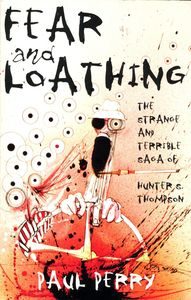
  • Fear and Loathing: The Strange and Terrible Saga of Hunter S. Thompson, Paul Perry

    Fear and Loathing: The Strange and Terrible Saga of Hunter S. Thompson, Paul Perry

    Thunder’s Mouth, 1992 (2004 revision), 274 pages, US$14.95 tpb, ISBN 1-56025-605-2

    Since I have declared 2009 “The Year of Hunter S. Thompson” in my reading list, I have decided to supplement my Thompson with books about Thompson. While the writer may have lived only one life, it’s rich enough to allow many different interpretations by biographers.

    There’s a fundamental difference, though, in the books that were written while Thompson was alive and those published after his suicide in 2005. Much like there’s a difference between the books that seek to portray Thompson as the wild and crazy gonzo writer, and those who seek to go beyond the surface. Paul Perry’s Fear and Loathing, alas falls in the less-satisfying categories.

    The biggest problem with Perry’s book is that it was written in the early nineties, and its 2004 re-edition barely adds four pages of meaningless fluff. While it’s true that Thompson’s most interesting work spanned only a few years in the late sixties and early seventies, it’s also fair to say that any book that does not deal with Thompson’s last years (including his resurgence partly fueled by the Fear and Loathing in Las Vegas film), and ultimately his death, is incomplete. Time has moved on, leaving Perry’s biography in place.

    The other problem is that while Fear and Loathing acknowledges the gap between Thompson-the-legend and Thompson-the-man, it seems quite happy in printing the legend. In many ways, it’s the only possible choice when trying to fit Thompson’s life in less than 300 pages: cut the periods where nothing is happening, print the good stories, and keep going. This isn’t an entirely superficial book (although the lack of references is telling), but it’s best read as an introduction to Thompson, not a definitive biography.

    It probably sounds as if I didn’t enjoy Fear and Loathing, but that’s really not true. After a rather dull and distant first section (up until Hell’s Angels, roughly), the biography picks up once Perry can interview people with stories to tell about Thompson the wild man. Ralph Steadman (who illustrated the cover and provided a small color portfolio of illustrations) is one of the book’s primary sources, and the energy of the narrative picks up once he’s able to talk, first-hand, about the Kentucky Derby, or the America’s Cup event they were asked to cover together, not to mention the disastrous trip in Zaire for the Ali-Foreman boxing match. It becomes even more interesting once Perry himself enters the picture as the Runner’s World editor who was able to convince Thompson to write an article on the Hawaii Triathlon. If Fear and Loathing has a highlight, it’s in providing a quasi-epilogue to Hell’s Angels by describing first-hand a meeting between Hunter and Ken Kesey, twenty-five years after separating. Another strong moment is in learning of dealings between Thompson and editing legend Ian Ballantine. The second half is a joy to read, even when it’s glossing over important moments.

    But as suggested above, the book ends on a truly strange note, depicting 1990s Thompson becoming a fitness freak (in part thanks to Perry), mere paragraphs after discussing his 1990 arrest. This is a view somewhat inconsistent with the other profiles of Thompson, and though it provides a certain form of narrative closure, it seems trivial in light of the next fifteen years of Thompson’s life.

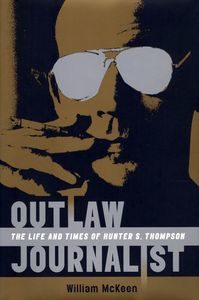
    Now that the first wave of post-eulogy titles is firmly in bookstores, we’re getting not only the complete story of Thompson’s life, but well-rounded ones as well. I will admit that this review was written as I was reading William McKeen’s Outlaw Journalist, a biography that is, in almost all respects, a better book that Fear and Loathing. But it’s also twice the size and is written by a journalism expert. Fear and Loathing, for all of its shortcomings, does manage to provide a short, coherent and quick overview of Thompson’s life: perfect for newcomers to the gonzo legend, or people with no time to spare.

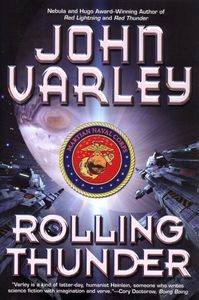
  • Rolling Thunder, John Varley

    Rolling Thunder, John Varley

    Ace, 2008, 344 pages, C$24.95 hc, ISBN 978-0-441-01563-4

    Varley fans who complained about Red Thunder and Red Lightning aren’t likely to feel much better after reading Rolling Thunder, the newest installment in a series that seems intent on showing how ordinary the author has become. It’s not a terrible novel, but it’s intensely familiar, leads to a conclusion that seems pasted from Varley’s previous work, and it survives only thanks to Varley’s usual gift for compelling narration.

    A generation removed from Red Lightning, Rolling Thunder‘s narrator is one Patricia Kelly Elizabeth Podkayne Strickland-Garcia-Redmond, daughter of the previous book’s Ray. As the novel begins, she’s stuck on Earth, serving her time in the Martian Navy by acting as an immigration officer. It’s been a few years since the Martian Revolution of the previous volume, and Earth hasn’t quite adjusted to the change. The situation around the world is worse than ever, in part thanks to the disaster descriped in the previous novel, but Mars isn’t ready to let everyone immigrate en masse.

    When Podkayne’s great-grandmother is suddenly scheduled for bubble stasis for medical reasons, it’s a mandatory ride home and family reunion for her, then a reassignment to the entertainment division of the Mars Navy where she becomes a jazz singer. (Don’t worry: she justifies why the music she sings is all made out of classic numbers. As usual with writers of Varley’s generation, the future doesn’t belong to pop music —or anything made after the sixties.) A tour to Jupiter’s Moons doesn’t go as planned, though, and the consequences are dire both for Podkayne and for the human race.

    Like its predecessors, Rolling Thunder is grossly chopped into two relatively independent sections, separated by time. A disaster leaves Podkayne unchanged, but affects everyone else’s perception of her, with dangerous results for the young woman. It all leads to a conclusion that seems to borrow equally from The Ophiuchi Hotline and Steel Beach.

    Also like its predecessors, the saving grace of Rolling Thunder isn’t to be found in its overarching plot, but in its moments or line-by-line narration. The homages to Heinlein are just as blatant as in the previous books, but the clear-voiced narration holds up things better than you’d expect, with lengthy yet appealing digressions on how things are done at that time. This being said, I wonder if Heinlein could have pulled off the dark ending of this novel, in which the characters basically run far far away in order to avoid the apocalypse threatening the rest of humanity.

    As a science-fiction novel, it’s a minor work. It’s even more disappointing coming from Varley, although none of the three books in its series have been particularly impressive. With a bit of effort, this could have been a novella: the plot density is laughable, especially when the bulk of the novel seems to be Podkayne telling us about her day-to-day life.

    If readers have made it thus far in the series, they might as well keep going: It’s an amiable entry in the series and the fact that it’s slight and negligible doesn’t make it less than entertaining. What’s more, it’s a stepping stone to what Varley says is the fourth and final tome in the series, Dark Lightning, to be written and published in a few more years. Not that we’re in any hurry.

    It’s a sign of the novel’s minor impact that it’s not particularly interesting to dissect or even comment: If Varley’s your thing, this will do while you await for his next novel. But there’s no denying that Varley’s best works seem more and more distant.

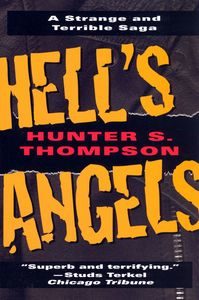
  • Hell’s Angels, Hunter S. Thompson

    Hell’s Angels, Hunter S. Thompson

    Ballantine, 1967 (1996 reprint), 273 pages, C$17.00 tpb, ISBN 978-0-345-41008-5

    Let’s face it: most books have a useful life measured in years, if not months. Once they’ve been removed from bookstore shelves, put out-of-print and remaindered, books quickly fade away from public attention. Non-fiction withers away even less gracefully than fiction: The world outside the book evolves, leaving the subject behind as a historical curiosity.

    Hunter S. Thompson’s Hell’s Angels is part of a tiny minority of enduring non-fiction titles. Still in print forty years after publication, it’s still being purchased and read today. Two reasons explain why: First, it’s a book by Hunter S. Thompson, a writer whose legend burns just as brightly today than in 1967. Second, it’s a crackling good read about a fascinating subject that remains of interest today.

    For if the hippies of San Francisco’s mid-sixties have faded away, the Hell’s Angels that flourished at the same time are still very much active today. Their outlaw legend has shifted somewhat: People (especially in French Canada) now tend to associate their illicit activities with organized drug-running and biker wars rather than the anarchic hooliganism of their early years. But the mystique endures just as it did in 1965, the year when Thompson wrote his first article on the San Francisco-area Hell’s Angels and ended up up riding with them for another year while researching his book-length narrative. (The ride ended when, as Thompson describes in the gut-punch last chapter, he himself was “stomped” and beaten by the Angels.)

    One of the reasons why Hell’s Angels remains so readable today has to do with Thompson himself: Though he calls the Angels stupid and ignorant, there’s no doubt that he has considerable sympathy for the outlaws and the way they can get away with what they do. Thompson himself wasn’t an entirely straight arrow at the time, and fans will recognize typical Thompson stories as he describes how he “somehow” ended up firing a shotgun outside his apartment at night. Thompson, in fact, spends more time decrying mainstream treatment of biker gangs (calling the contemporary media coverage woefully ignorant, sensationalist and patronizing) than he does condemning the Angels.

    By living with the gang for a year, Thompson also manages to understand and describe them better than anyone else at the time: His exploration of the psycho-sexual dynamics of the Angels is brutally frank (even today) and completely engrossing. The portrait he draws up is that of a familiar type: men who can’t find a place in mainstream society, hanging together in a mutual support group. When Hunter ends his book with dire predictions that motorcycle gangs are part of the way American is going to become in the future, history proves him right.

    But socio-political analysis aside, the best moments of this great book end up being the first-hand descriptions of a Hell’s Angels run on a small California community, as both Angels and local authorities are practically begging for a confrontation. It ends up being a non-story, with Thompson stuck in the middle, but it’s also a segment that would mark a turning point for him: Hell’s Angels may not be completely gonzo journalist, but it’s certainly a prototype of articles in which the process of getting the story becomes the story.

    In-between, you get passages describing the pure thrill of pushing a motorcycle so close to the edge that you can’t see beyond the next turn in the road. You get a sense of San Francisco during the sixties. You get Hunter S. Thompson as a young man trying out his full powers as a writer. But more than that, you get a crackling good read, even forty years after publication. This is a book that has endured for good reasons: It’s a minor classic in its own way, and it’s well worth picking up.

    [June 2009: I wouldn’t go so far as to call Tom Wolfe’s The Electric Kool-Aid Acid Test an essential companion to Thompson’s Hell’s Angels, but it does offer another look at mid-sixties San Francisco and in discussing Ken Kesey’s psychedelic lifestyle, often overlaps with Thompson’s motorcycle gang. (In fact, Thompson is acknowledged as having provided audio tapes to Wolfe.) But modern readers will trip over the most annoying thing about The Electric Kool-Aid Acid Test, which is Wolfe’s stream-of-altered-consciousness prose style: Impressionistic at beast, unreadable at worst. If it does a fine job at portraying a particular mindset, it also graphically shows why the hippies went away since then. Still, patient readers will find a few nuggets of interest in the depiction of the times, as well as random factoids and references. Heinlein’s Stranger in a Strange Land is referenced casually, as is Clarke’s (unattributed) Childhood’s End. Plus there’s the fascinating etymological tidbit that “bummer” (as in: “a bad trip”) was adopted by the hippies from the Hell’s Angels slang for, yes, “a bad trip” –you can figure out what part of the anatomy hurts after a bad motorcycle ride. Ultimately, though, much of Wolfe’s book is simply too difficult to read to be truly rewarding. Of historical interest.]

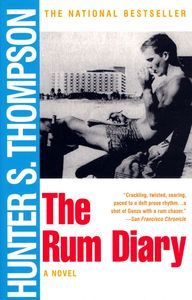
  • The Rum Diary, Hunter S. Thompson

    The Rum Diary, Hunter S. Thompson

    Simon & Schuster, 1998, 204 pages, C$15.50 tpb, ISBN 978-0-684-85647-6

    Published in 1998, in the waning dusk of Hunter S. Thompson’s career, The Rum Diary is nonetheless a formative work for the American writer/journalist: The first draft of the novel was completed in the early 1960s, as Thompson himself bounced around New York, Puerto Rico and Big Sur. Finally published (and somewhat re-written) in the late nineties, The Rum Diary offers a curious bookend to Thompson’s career. Conceived early but finished late, it offers a parallax view into the writer’s head.

    The plot, unsurprisingly, concerns the adventures of an American journalist, Paul Kemp, as he makes his way from New York to San Juan as a small newspaper staffer. There are, as you may expect, a number of complications: Kemp is fascinated by a Caucasian women who flew in on the same plane as he did, and then there’s the free-flowing atmosphere of San Juan during the late fifties, a barely modernized land where rum flows as freely as water.

    Let’s be blunt for a moment: If it wasn’t for the fact that this novel was written by Hunter S. Thompson, there wouldn’t be many reasons to read it. The prose is fine, but hardly transcendent and nowhere as explosive as latter-day Thompson. The plotting is generally aimless. The characters aren’t worth caring about. The Rum Diary trades on the reputation of its author as a hard-drinking rabble-rouser: Could this novel be autobiographical? Can it offer clues regarding the rest of Thompson’s work? Does it contain a Rosebud! moment when we suddenly understand the rest of Thompson’s life?

    Well, no. In most aspects, it’s a fairly ordinary, aimless novel of a young man trying to survive after drinking too much in a quasi-foreign land. Puerto Rico may be American territory, but Kemp’s life in San Juan is one of an expatriate, congregating with the other English-speaking Caucasians and looking at the native population with a heavy dose of, well, fear and loathing. If the novel has one thing that can stand separate from the reputation of its author, it’s the description of San Juan as a place: Thompson clearly establishes the atmosphere of the time, the peculiarities of an environment so far away from everything else, and the bonds that form before fellow cast-offs. Still, Thompson isn’t particularly kind to Puerto Ricans, and occasional racial slurs make it through the novel. (Raw excerpts of The Rum Diary, before re-writes, can be found in Thompson’s Songs of the Doomed collection: in them, he’s even less kind.)

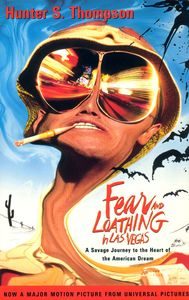
    But it’s far more interesting to compare Kemp and Thompson, or rather Thompson before the legend and Thompson after. The Rum Diary only has a little of the madness to be found in works like Fear and Loathing in Las Vegas: Kemp can be moody and contemplative, whereas latter-day Thompson was belligerent and manic. (Their drugs of choice at the time may have something to do with it.) It’s tempting to go back to Kemp and see there the potential not just for latter-day Thompson, but what would have happened if the younger Thompson had been taken seriously as a writer of fiction, if he had avoided the drugs of late-sixties San Francisco, if he had found himself just as Kemp narrowly seems to find himself at the end of The Rum Diary. But that’s asking a lot of a novel that is, after all, just one that describes a not-so-young-man living it up in an exotic land. Yet that may be the only thing worth asking about a novel where drunken episodes substitute for plotting.

    It goes without saying that The Rum Diary‘s first audience should be those who have considerable knowledge and sympathy for Thompson before even cracking open the first page. This is a filler in the grand tapestry of Thompson’s work, and it may even best be read at the end of his bibliography rather than at the beginning; until the first San-Juan-era version of the manuscript is made available, who’s to say how much of what we’re reading from from Thompson-the-novice and what’s from Thompson-the-veteran? His biography, Gonzo, makes it clear that publishing the novel was not a grab at literary respectability as much as it was a way to make money: a more solvent Thompson wouldn’t have allowed the publication of the novel. Doesn’t that perfectly place The Rum Diary in Thompson’s oeuvre?

  • The Shell Game, Steve Alten

    The Shell Game, Steve Alten

    Sweetwater Books, 2008, 512 pages, C$33.00 hc, ISBN 978-1-59955-094-7

    (Read in translation as La Conspiration de l’Or Noir, City, 507 pages, ISBN 978-2-35288-186-5)

    Fiction writer are prone to various work-related illnesses, but one of the most debilitating one is believing in their own genre tropes. There’s a reason why Science Fiction writers are a bunch of hard-core skeptics who are never invited to speak to UFO conferences: The moment they start believing in Little Green Men, their credibility is toast, and their fiction is next. The equivalent for thriller writers is to start believing in their own conspiracies, and it’s just as damaging: Ask anyone about Payne Harrison’s Forbidden Summit (a UFO-conspiracy novel that seemingly destroyed his fiction career) and you’ll see what happens to those who put footnotes saying It’s all true!

    Alas, the Bush years have fueled all sorts of paranoid reflexes even in the most reasonable citizens, which may explain a recent influx of deeply grim novels in which stalwart heroes are stuck between bloodthirsty terrorists and a government ready to do even worse things on behalf of national security. Nelson DeMille’s Wild Fire is only the best-known of this new breed of novels where the government is just as dangerous as terrorists, and I don’t see this trend going away despite the inauguration of a new administration. We’ll get quite a few novels like Steve Alten’s The Shell Game until the wave crests.

    I won’t try to pretend that Alten’s career so far has been irreproachable: For every strong thriller like his debut Meg (about an 18-wheeler-sized shark) or Goliath (about a top-secret submarine that turns sentient), there’s been a succession of insipid Meg sequels that did little to enhance his track record. The Shell Game is a departure for him in many ways. For one thing, it’s published by a boutique publishing house best known for conservative-leaning religious-themed non-fiction and not Alten’s usual top-tier publishers. The reason for that change quickly becomes apparent from the plot summary: In 2012, a man tracking down the murder of his wife discovers a plot by US government operative to detonate a nuclear explosive in a major American city, in order to justify the invasion of Iran.

    The parallels with DeMille’s Wild Fire exist, but DeMille doesn’t sink nearly as deep in conspiracy-land as Alten does. Nor does DeMille risk tying his story with real-world figures. Here, though, characters have worked with Karl Rove, have defeated Hilary Clinton for the democratic presidential nomination, are named “McKuin” rather than “McCain”, and cite reams of supporting documentation whenever they meet.

    And oh boy do they cite. Pages of citations. With figures, references and reminders of historical events that should be perfectly obvious to the two people having the conversation. The first half of The Shell Game is a dull recitation of a thesis on peak oil and the ways the oil industry has a stranglehold on American society. And if you’re still not satisfied by the in-text infodumps, then you’ll feast on the citations between chapters, the plainly didactic confessions of a Republican operative that are interleaved between segments, not to mention the foreword in which Alten explains that a good chunk of the novel is based on actual verifiable facts, and the afterword which provides citations for some of the novel’s concepts.

    Desperate much for validation, ya think? No, it’s not enough for Alten to re-cast, much like DeMille did, the untenable “9/11 was an inside job” ideas into a future plot involving nuclear weapons. He also drags in a bunch of other conspiracy theories, from false vaccines that are actually injections of nanochip trackers to the involvement of the Saudi Arabian government in white slavery to yet another mention of the Promis super-snooper software. But when you start looking at the Alten’s sources at the back of the book, you quickly fall into a maze of unspecified “numerous sources”, untraceable “confidential sources” and a handful of books like Crossing the Rubicon that aren’t exactly unimpeachable. This novel isn’t just steeped in conspiracy theories, it’s so deep in them that they drown the actual story. By the time the actual plot unfolds, late in the novel’s second half, it’s too little too late: An explosive twist happens too late in the story to allow for reasonable dramatic development.

    The irony is that from a strictly ideological perspective, I’m probably not that far away from Alten himself: As a French-Canadian, I’m somewhere beyond the left edge of American mainstream politics, and I too have ground my teeth into dust during the eight years of the Bush administration. But as much as I enjoy the storytelling potential of conspiracy theories, I don’t make the mistake of using them as reasonable explanations for what’s going on in the world.

    What’s really sad about The Shell Game‘s paranoid reliance on a oil barrel full of conspiracies and dubious sourcing is that it obscures the real strengths of the novel: Alten’s understanding of the ways oil intersects with American politics is fairly sophisticated, as is his explanation of Saudi Arabia’s influence on the US government (white slavery sponsorship excluded). There’s also something intriguing about the triangular nature of the plotting at work here, as the heroes find themselves stuck between warring terrorists and a government willing to sacrifice a lot of pawns. It’s easy to dismiss the paranoia, but it’s a valid sentiment that, especially in its milder form, was shared by a lot of average Americans during Bush’s second mandate. Still, The Shell Game does itself no favors by burying itself in sources: in begging for validation, it shoots itself in the foot, whereas a wilder approach leaving more space for fiction wouldn’t have invited so much scrutiny. (No one asks Matthew Reilly for sources, for instance.) From a storytelling viewpoint, a less discursive novel also would have avoided the interminable infodumping that kills The Shell Game early on.

    In interviews promoting The Shell Game, Alten confesses that his novel has a didactic intent, but stops short of professing any belief in the 9/11 conspiracy theories. If there’s any hope left for Alten’s next few novels, it’s that thin edge of skepticism. The last thing we need is another author who starts believing his own fiction.

    [Also: Francophones should be wary of reading The Shell Game in translation: While La Conspiration de l’Or Noir (which back-translates in “The Black Gold Conspiracy”) is published by first-tier French publishing house City and probably enjoys better distribution in French-Canada than its English-language original, it is also riddled with numerous mistakes that further damage its credibility. Clinton’s famous “The economy, stupid” is translated as “L’économie, c’est idiot” [P. 133: “The economy, it’s stupid”] while an awkward sentence early i
    n Chapter 36 makes it look as if the U.S. Bank Tower is the tallest building in North America. Worse yet: the translation introduces small errors of fact, in which a democratic candidate is called a “sénateur républicain” [Chapter 26] and the chemical attack on Halabja is described as having occurred in 1998 rather than 1988. [Chapter 20] Reader beware…]

  • Goddess for Hire, Sonia Singh

    Goddess for Hire, Sonia Singh

    Avon Trade, 2004, 305 pages, C$21.95 tpb, ISBN 0-06-059036-X

    Don’t tell anyone (especially not you, Google), but I’m not above reading some romantic fiction from time to time. That’s right: In between my hard Science Fiction and my tough technothrillers, I can find a place for contemporary women’s fiction. Here’s the even bigger secret I want you to keep: Most of the time, romance is a lot more fun to read that the pretentious twaddle that traditionally passes for leading-edge SF. Romance authors, bless their comic sensibilities, usually have a pretty good of what they’re writing, and who they’re writing for.

    And even when it’s not completely successful, competent romance is almost impossible to hate.

    Take, for instance, Sonia Singh’s debut Goddess for Hire. Not content to appropriate the tone of contemporary young urban female romance for use in an Indo-American family context, it also brings in elements of superhero fantasy by giving magical superpowers and a sword to the narrator, transforming her into a modern reincarnation of Hindu goddess Kali. That’s a lot of baggage to cram in a 300-page book, even when you don’t discuss the tall dark handsome love interest, the death threats against the new goddess or the less-than-helpful guru with an insatiable thirst for Coca-Cola.

    The strains that the fantasy elements place on the structure of a light-hearted romance are obvious early on: Since this is a nice novel, our narrator can’t indulge too much in the whole “goddess of death” personae, and ends up using her sword for strictly non-lethal purposes. (Somehow, I don’t think swords were ever considered primarily non-lethal, but then I don’t live in California.) Never mind that contemporary superhero fiction quickly leads to questions about vigilante justice, unavoidable violence in dealing with hardened criminals or the price that heroes have to pay: These questions are all neatly, almost blatantly side-stepped in the pursuit of a comic novel. And don’t expect sparks from the romantic side of the story either: the Love Interest is telegraphed early on and is achieved relatively easy as the plot’s multiple narrative strands fight unsatisfactorily to a standstill.

    If “chick-lit” is supposed to be about young urban female professionals, Goddess for Hire‘s narrator only seems to be a professional in the art of not working. At first and even second glance, Maya Mehra isn’t much of a character: Thirty-something, jobless, shopaholic, superficial and under-achieving (“of all the ninety-seven adult members of the Mehra clan spread throughout the United States, ninety-six are doctors, the sole exception being your truly.” [P.4]), she doesn’t seem like much of a catch or a heroine until she gets in touch with her inner goddess –and even after she does, don’t expect much inner development as she enjoys the attention and does practically nothing to earn whatever comes her way. (This is one of the few novels where I would have liked to sit down with the male romantic interest and ask “Seriously, what do you see in her?”) Frankly, a story about the rest of Maya’s family may have been more fun to read.

    But comedy can redeem a number of flaws, even when they concern the teller of the tale: Singh’s narration is just hip and sassy enough to make the novel work well despite everything, and her use of Indian-American elements isn’t just icing on a conventional novel: Maya’s problems and opportunities stem from her particular heritage, and add a lot to what could have otherwise been a bland (and far less likable) novel despite what seems to be quite a bit of stereotyping. It’s a fast and fun read, which is all I ask from comic romances. It’s just when the novel begs to be considered as something else that the strains appear. But for those who are willing to be indulgent, this is a breeze. It’s not hard to imagine the target audience for this book, and how it aims for quite a bit of wish-fulfillment in reaching that audience. On some level, you have to admire that kind of dedication. Much like its heroine, you may not completely respect Goddess for Hire the day after, but it’s utterly charming throughout. Which is still a lot more than I can say about the other stuff I read.

    [February 2009: As much as I wanted to love Sonia Singh’s Bollywood Confidential, her follow-up novel left me unsatisfied. As the story of an California-born Indian actress going to Bombay/Mumbai in the hope of a star-making turn in a Bollywood film, it’s already a bit more culturally interesting than the L.A.-based Goddess for Hire. Unfortunately, the look at India or the Bollywood industry is shallow, and the ordinary romance of the plot does little to redeem matters. Characterization doesn’t go much beyond stereotyping, and the painfully obvious plotting doesn’t add much. The worst moment of the novel, sadly enough, comes near the end with a completely unbelievable speech that diminishes the heroine. (The choice of writing the story in third-person POV also takes away the sassy narration that made Goddess for Hire such an endearing read despite its other problems.) This being said, there are a few better moments here and there as the heroine discovers the many facets of Mumbai, and Singh does show us a few promising hooks on which a far more interesting story could have been hung. But the end result is barely worth more than a shrug. Too bad; I really hoped for more.]

  • The Meaning and Culture of Grand Theft Auto, Ed. Nate Garrelts

    The Meaning and Culture of Grand Theft Auto, Ed. Nate Garrelts

    McFarland, 2006, 256 pages, US$35.00 tpb, ISBN 978-0-7864-2822-9

    Yes, it’s true: I dearly love the Grand Theft Auto (GTA) series of videogames. I have been playing them on PC since the demo of the first game, and they’re the only series that can get me to show up in stores on their release date. But I love them for more than the automobile mayhem and the top-notch storytelling: They’re among the most brilliant virtual experiences on the civilian market, and I have come to look forward to new GTAs as fondly as real-world trips to other cities. And that’s without counting the subversive satirical content, the ways the series meshes gameplay with storytelling, or the ramifications of the series free-form playing over the realism/gameplay balance.

    It turns out that I’m hardly the only person to enjoy seriously thinking about GTA. I didn’t know about The Meaning and Culture of Grand Theft Auto before getting in by mail as a Christmas gift, but it quickly shot up to the top of my pile of books to read: A collection of 14 critical essays about the series and its relationship with contemporary society, it’s a book that could have been written just for me.

    The first thing one notices about Nate Garrelts’ anthology from a quick flip through the book is how important the Hot Coffee controversy of early 2005 has turned out to be in defining GTA as a serious subject for study. The public furor over a relatively tame sex mini-game hidden in the source code of the application turned out to mark an important turning point in the evolution of video games, argue several of the authors: By clearly forcing outsiders to see GTA: San Andreas as an adult gaming experience rather than get another game “for the kids”, the Hot Coffee episode signaled a belated turning point in gaming. It also brought a lot of academic attention to the significance of the series, partly leading to this essay collection.

    But don’t let your eyes glaze over the prospect of academics writing about video games: One of the greatest strength of this collection is how nearly every essay seems to have been written by a gamer-turned academic, with obvious benefits for the accessibility of the content. Despite a few hermetic pieces toward the end of the book, each essay here can be read without too much knowledge of academic jargon (although, as is usually the case, some sympathy for the way pop culture is formally dissected can be useful in shaping one’s approach to the essays.) If you’re expecting a denunciation of the series, you’re also up for a surprise: all the essays here have a strong sympathy toward GTA, even when pointing out the failings of the series so far.

    In fact, some of the most interesting material concerns the links between GTA and the rest of society at large. GTA: San Andreas (GTA:SA) was particularly interesting in that, for the first time, an audience predominantly composed of young white suburban men could live vicariously as a black ghetto hero trying to fight against a corrupt system. This, suggest some authors, may not have been coincidental to the controversy surrounding the game. Other good moments come when authors dissect GTA:SA’s politics as it briefly tackles US foreign policy (the same “Mike Torrino” moments are cited in two successive essays) or the racial ramifications of the game’s storyline, through both easy stereotyping and more textured characterization. Other installments consider GTA’s satirical radio stations, and how they become a way to criticize American society. (Though few essays highlight the fact that GTA comes from an overseas developer.) Several essays suggest new and exciting directions in which future GTA installments could evolve.

    On the other hand, there are a few disappointments. One of my least favorite aspects of the series has been the misogyny of its universe, and there’s preciously little commentary on this issue here. Meanwhile, the last few essays seem to be wasting time talking about “the semiotic self” and “narrative agency”, dragging the reader kicking and screaming in dull analytical pastures.

    Still, there’s usually something interesting to be learned even when the essays get deep in academic references. One of my favorite essays in the book, “The subversive Carnival of GTA:SA”, stretches the “game-as-carnival” metaphor until it snaps, but not before presenting an intriguing look at how games are played. Two other essays about urban aesthetics and experiencing place managed to articulate a number of things I felt after playing GTA heavily, then visiting the cities in which they were based.

    I’m still amazed that despite a few years of GTA fandom, I still hadn’t learned about this book until recently. But that may be more a problem with my information sources (let’s just say that gaming blogs aren’t big on serious critical analysis) than with the book itself: The Meaning and Culture of Grand Theft Auto is a perfect choice for every GTA gamer with more than half a brain to bear on the issues raised by the games. As gaming become a bigger part of culture (keeping in mind that Grand Theft Auto IV‘s first week of release saw sales bigger than the opening weekend for The Dark Knight) and comments that culture more aggressively, there will be more and more of a place for critical analyses and serious thought about those games. GTA may be the first gaming series to earn that kind of attention, but there will be many more in the future.

    [January 2009: Published in 2006, The Meaning and Culture of Grand Theft Auto can obviously only comment on the series up to and including Graft Theft Auto: San Andreas, completely missing out on 2008’s GTAIV. But one of the best compliments one can pay to Nate Garrelts’ anthology is that its points are reinforced rather than undermined by GTAIV: The series has evolved but not changed dramatically in this latest installment, although Rockstar’s obvious pursuit of “realism” can be seen as a conscious reaction to embrace the “mature gaming” reputation earned in the wake of the “Hot Coffee” episode. In other ways, it’s sad to see that GTAIV has not managed to push the series in other and more subversive directions: There’s still a strong disconnect between the game’s liberal politics and its misogyny, and the lack of scope sabotages some of the social gains made during GTA:SA. On the other hand, GTAIV’s relentless realism introduces new questions about the balance between realism and gameplay that could be pursued if ever McFarland pursues a sequel to this critical anthology.]

  • Absolute Watchmen, Alan Moore & Dave Gibbons

    Absolute Watchmen, Alan Moore & Dave Gibbons

    DC Comics, 1987 (2005 revision), 464 pages, C$86.00 hc, ISBN 978-1-4012-0713-7

    If all goes well, 2009 is going to be the year of Watchmen. Twenty-two years after its groundbreaking 12-issues 1986-1987 run, this graphic novel classic is finally coming to the big screen, and everyone who has thus far managed to avoid it soon won’t have any excuse for picking it up.

    I won’t be among those. In the past fifteen years, I’ve read Watchmen several times, in two languages and three different editions. It was one of the first graphic novels I ever owned, and it’s still one of the best. With the movie coming out and the holiday sales around me, I decided to be the ultimate fanboy, and finally get myself a copy of the ultimate, no-expense-spared, re-colored Absolute Watchmen, even if it would prove to be one of my costliest purchases of the year. What can I say; at some point, it’s good to admit being a fan.

    It’s even better when considering what one gets from the Absolute Watchmen package: Not only the graphic novel itself, but a handsome full-page slip-cased hardcover edition, along with notes regarding the making and impact of the series, glimpses at the script and miscellaneous bonus artwork. As an extra hefty bonus, the entire series has been re-colored, keeping the old-school style but with the precision of the latest digital technology. (This re-colored version has been kept as the source of the latest reprints of the book, even in cheap paperback editions.) If you’re a real fan with some money to spare, this Absolute Edition is likely to remain the definitive edition of the book for a while longer.

    As for the graphic novel itself, well, it’s still just as good as it ever was. A blend of increasingly-alternate history (now that the story’s 1985 seems farther away than ever before, Watchmen is slowly gaining a patina of historical fiction), superhero-fiction, literary sensibilities, action and crackling dialogue, Watchmen marks the turning point of an era in graphic storytelling. It’s the end of the old-school superhero tradition and the “nine-panel grid” era and the beginning of the graphic novels movement and ambitious new thematic vistas for superheroes. The skill in constructing the series, issue by issue, page by page, is still inspiring after all those years. The references, allusions, symbolism, character moments and background complexities of it all remain the standard by which other comparable work is judged. It may not be perfect, but it’s close.

    No, the movie won’t be as good: Reading the comics, it’s striking how what the most impressive thing about Watchmen is how fully it exploits the peculiarities of its format, from the nine-panel grid to the type of transition and interleaving that are only possible with comics. Despite the film-makers’ best intentions, I doubt that they’ll do half as well.

    But no matter: Regardless of how the movie turns out, Watchmen-the-book is going to stay on the shelves, ready for another generation of readers. As for me, I’ve found my favorite edition of the story, and that’s the one that’s going to stay in my library until I get an itch to re-read the story again. Most probably moments after seeing the movie’s end credits.

    [January 2009: Watchmen already selling like hotcakes, the biggest literary movie tie-in product is a companion book called Watching the Watchmen, co-written by the series’ artist Dave Gibbons. The bulk of the book is a series of sketches for the series, straight from Gibbons’ archives. But the most interesting things about Watching the Watchmen are scattered in-between the sketches, as Gibbons writes about the process of creating Watchmen, and its impact. It’s interesting, but hardly earth-shattering: For anyone who’s less than a convinced fan of the series, there’s nothing truly essential about this companion book, especially if you have already read the back pages of Absolute Watchmen. It may be a cool gift, or an extravagant indulgence, but otherwise I’d recommend investing in a copy of the definitive absolute edition.]

  • Without Fail, Lee Child

    Without Fail, Lee Child

    Jove, 2002 (2003 reprint), 401 pages, C$10.99 mmpb, ISBN 0-515-13528-3

    Every Jack Reacher adventure is slightly different, and so it is that Without Fail‘s distinction is to put Reacher in a situation that’s closer to official power than ever before. Having left behind the small Texas towns of Echo Burning, he finds himself on the East coast, hired by the US Secret Service to find ways to assassinate the Vice-President-elect of the United States. Or rather, to find ways in which the VP could be assassinated so that it doesn’t actually happen. Reacher is good at that; in fact, he’s pretty good at anything a thriller requires from a protagonist.

    This being said, it’s a bit of a stretch for involve perennial loner/drifter Jack Reacher into the middle of official operations. So Child reaches way back in Reacher’s history to create a link between Reacher, his estranged brother (killed back in Killing Floor, the first book of the series) and the brother’s ex-girlfriend, now in charge of the Vice President’s security details for the US Secret Service. It’s a tenuous connection, but it almost doesn’t qualify as a coincidence unlike a few of the series’ preposterous setups so far.

    Fortunately, this weakness soon becomes irrelevant once the action starts. The would-be assassins that are gunning for the vice president are kind enough to call their shots, providing plenty of investigative opportunities for Reacher and the Secret Service. Although the story doesn’t contain quite the number of conceptual twists and turns that other Reacher novels have managed, it does have a surprising development midway through, and manage to turn the initial expectations on their head: As it often happens when Reacher is around, the motivations are often more personal than political, even in assassinating a vice president.

    If the twists are muted down, that’s thankfully not the case for the series’ attention to procedural detail: As usual, Reacher knows a lot about everything and a lot of this knowledge proves essential when tracking down suspects, whether it’s penetrating security protection or figuring out how a sensitive message was placed on a desk under constant video surveillance. To those procedural details, Child adds a lot of information regarding the protection of VIPs: The United States Secret Service has a thankless job when it comes to protecting its charges, but the details of how it tries to do so are almost endlessly fascinating.

    In Reacher’s world, some things don’t change no matter the adventures, and so he once again finds himself romantically entangled with a female character. What’s slightly different is her connection to Reacher, and the reasons why she falls in love with him. Also slightly different is the fact that Reacher spends a good chunk of Without Fail working with a partner —someone who can actually give him some serious competition in the usual skills required to track down his opponents. What this means for future installments of the series can only be guessed at.

    But Without Fail‘s overall success isn’t something left to guesswork: While it won’t stand out from the series as a particularly strong entry (there’s something amusing at the on-the-nose symbolism of the number of suits that Reacher has to wear during the novel), it does play with the formula a bit, and delivers the expected clean prose, strong plotting and tough-guy action we’ve come to expect from Jack Reacher. For those who wishes they could see Reacher in a suit with some official status, it’s a welcome entry, and few fans will be disappointed.

  • Gonzo: The Life of Hunter S. Thompson, Jann S. Wenner & Corey Seymour

    Gonzo: The Life of Hunter S. Thompson, Jann S. Wenner & Corey Seymour

    Back Bay Books, 2007, 467 pages, C$17.99 tpb, ISBN 978-0-316-00528-9

    Some will be surprised to learn that I’m a big fan of writer/journalist Hunter S. Thompson. After all, there’s no comparing our prose styles, and I couldn’t be farther away from Thompson on the drinking/drugs/bad-behavior spectrum. (I make straight-edgers look like boozy degenerates.) But what keeps me coming back to Thompson’s work is his strong prose and the strength of the convictions that shine through his articles. For most people, though, Thompson-the-writer remains a second to Thompson-the-man, still the stuff of legend decades after his best work and his worst excesses.

    It took a chance theater viewing of the documentary GONZO: THE LIFE AND WORK OF DR. HUNTER S. THOMPSON to rekindle my interest in Thompson’s work: For years, I accumulated his books but never committed to a chronological read-through. Well, no more: This is the year of the Thompson, and there’s no better way to begin than by a look at the man, the life and the legend with Jann S. Wenner and Corey Seymour’s oral biography Gonzo: The Life of Hunter S. Thompson. (The movie is arguably adapted from the book, but both stand as different works in their own right. The midium is the message, and so the film doesn’t offer the depth of the book, while the book doesn’t have the archival material showing Thompson at work or play.)

    Oral biographies are basically snippets of personal recollections artfully edited in a coherent whole. It allows for many descriptions from different perspectives, sometimes strengthening the theme, sometimes contradicting it. Given Thompson’s legendary excesses, an oral biography is just about the only way to do him justice, as only the accumulation of first-hand witnesses can convince us

    Like most biographies, this one starts at the beginning –Hunter’s troubled childhood, running around making trouble until his arrest and expeditious referral to the army in lieu of incarceration. The tone having been set early, the rest follows almost naturally: the wild early years in New York, Puerto Rico and San Francisco, followed by the breakthrough success of Hell’s Angels, the Aspen sheriff race that brought him to the attention of Rolling Stones magazine, then the two Fear and Loathing books about Las Vegas and the Campaign trail ’72. After that, Thompson-the-man recedes and makes way for Thompson-the-legend: As the contributors allude to, Hunter took comfort in living the myth that he and others had created for himself. Alas, it made him even more uncontrollable and indisciplined. His work, not so coincidentally, also began to slide after that point: The testimony of the participants makes it clear that it took heroic efforts to bring a Thompson piece to print, but left unsaid is how much of Thompson’s published work really owes to the editors who put everything together at the other end of Thompson’s crises, substance abuse and unwillingness to act as a professional.

    This dovetails nicely into the foremost lesson of this biography: Thompson was a nightmare to live with. The same hard drinking, copious substance abuse, pranking and womanizing that made Thompson-the-legend so impressive also made Thompson-the-man impossible to tolerate on a daily basis. Even close friends have stories of awful episodes. The accumulation of such incidents, contribution after contribution, also make it clear that Thompson’s eccentricities were a lifestyle. The book’s second half, once past the early seventies, make it hard to avoid thinking that Thompson could have, should have been a far more active participant in American culture if it wasn’t for his strong streak of self-destruction. (There’s something blackly humorous in reading a doctor’s opinion that “Hunter had a superhuman liver.” [P.396]) For him, the end came ingloriously by way of self-inflicted gunshot in 2005.

    As a tribute to Thompson, Gonzo is essential: It shows that the legend was based on something real, but never sugarcoats the price that Thompson and his friends paid for his excesses. The worst thing that one can say about the book is that it’s too short (“Freak Power” is only mentioned twice, for instance). Thompson may have the last laugh over his biographers, having lived a life too rich to be contained between two covers.

    [March 2009: After binging on several more Hunter S. Thompson biographies, I have a slightly better perspective on the book: Gonzo may not be the best in-depth Thompson biography (for that, I would recommend William McKeen’s Outlaw Journalist) but it deepens our understanding of Thompson in ways that are difficult to explain in a straight biography: By allowing people to tell stories about Thompson, Gonzo strengthens the legend, but also relays the impact of the legend on others. On the other hand, The lack of a unified thread can also be a problem at times; as I read other biographies, I found places where Gonzo skipped over important events, and failed to connect them with others. It may be best read as a companion to a more conventional biography, as a way to extend the Thompson experience.]

  • The Futurist, James P. Othmer

    The Futurist, James P. Othmer

    Doubleday Canada, 2006, 257 pages, C$32.95 hc, ISBN 0-385-66209-2

    It’s a strange new world out there, in these early days of the twenty-first century. Past certitudes seem to have crumbled on themselves, and what’s left is a troubling memetic wasteland where labels don’t apply, no one knows anything and past performance is no guarantee of future results.

    Imagine being a futurist during those times, trying to tell people what’s going to happen when it’s almost impossible to figure out what’s happening now. You can recite the events of the past twenty years from the end of the cold war to the invasion of Iraq, but at a time where everyone is still trying to figure out what it means, even finding out what’s going on is a challenge.

    In its way, James P. Othmer’s The Futurist is a novel of its time: confused, snarky, torn between narratives, aware of the world but reluctant to engage too deeply with it. It’s almost science-fiction, almost comedy, almost a thriller and almost general literature at the same time. It’s an interesting read, but not a likable one.

    As the title suggests, The Futurist is first and foremost a character study. Yates (just as often called “The Futurist” in the prose) is someone who knows what to say to the paying audiences in front of him. He masters the jargon, has learned to limit his vision and enjoys a carefully calculated sociopathy. He’s so good that he’s able to speak in front of dramatically opposed groups and get standing ovations at both places.

    But as the novel begins, he dives headfirst into a mid-life crisis; his long-time girlfriend has dumped him for a history teacher, a space tourism crisis threatens to kills people who followed his past recommendations, and a drunken episode leads to an incendiary speech in which he renounces the fundamentals of his own field. But since no good deed ever goes unpunished, he finds himself even more in demand than ever before: the corporate gigs keep piling up, and a shadowy organization that may or may not be acting on behalf of the US government coerces him into acting as an informal spy for a nebulous project. Threats, both vague and specific, keep piling up in his mailbox. At home, his parents are acting strangely, and at work an ex-colleague is none too pleased with his recent actions.

    If you’re looking for a strong common thread or a plot-driven genre story, you’re not going to be entirely satisfied: The Futurist is perfectly happy to take place in a smog of disinformation. Yates doesn’t have a clue, and we’re not expected to know more than him in a tight third-person narrative. He does have a curious tendency to find himself in the middle of riots and explosions, but don’t worry: he can always depend on a retired multi-billionaire to help him out. Convenient plotting? Of course.

    It all reaches a climax of sorts in someplace that feels a lot like post-invasion Iraq, as Yates confronts a variety of enemies and reaches yet another epiphany. Given the novel’s generally aimless feel, a surprising number of plot threads are wrapped up, although the tentative epilogue reinforces the novel’s lack of certitudes.

    Looking for descriptive adjectives to describe this novel, it’s hard to do better than “William Gibsonian”, which is straight out of the novel’s second page: Like Gibson, Othmer is writing fiction inspired by his RSS feed, and uses genre tropes without really committing to them: A subplot about disaster in space could have been torn out of Analog SF magazine, but here remains a distant echo of bad headline news. Othmer is a bit better than Gibson at using guns and explosions to make plot points, but if The Futurist has to be shelved somewhere, it’s going to be next to hip contemporary character studies and not anywhere near thrillers. Like Gibson’s novels since Pattern Recognition, The Futurist hovers as the edge of our certitudes, which makes for an interesting reading experience but not a comfortable one. Much like the world out there, it’s amusing without being funny, action-packed without being entertaining and almost completely impossible to describe with any satisfaction.

  • The Omnivore’s Dilemma, Michael Pollan

    The Omnivore’s Dilemma, Michael Pollan

    Penguin, 2006 (2007 reprint), 450 pages, C$19.00 tpb, ISBN 978-0-14-303858-0

    I should preface this review by saying that I worked several summers on my uncle’s farm, and that I’m no stranger to that end of the food production chain. Several of the experiences described in Michael Pollan’s The Omnivore’s Dilemma aren’t so strange to me: I have moved cattle from one field to another, shoveled excrement, held on to carcasses being gutted and everything in-between the life of a farm hand from dusk to dawn. When I eat steak, I can tell you where it came from, how it was processed and why cows deserve to be eaten.

    But few North-Americans can say the same about what they eat, and the nature of the modern food-processing industry is such that no one can vouch for the provenance of the stuff they eat. It’s that realization that led Pollan to embark on a major documentary project: Trace the origins of what we eat, and do so using the excuse of four different meals.

    The first meal in an all-American McDonald’s lunch, and it’s the most hard-hitting part of the book. While many people (myself included) still harbor quaint notions of family farms, feeding North America requires an industry that is more about chemicals and overproduction than free-range cattle. In a few eye-opening chapters, Pollan describes entire agricultural landscapes taken over by the monoculture of corn, floating on virtual oceans of oil given how non-renewable substances are essential in pushing corn growing well beyond self-sustainability. In a few cogent passages, Pollan directly links government policies and subsidies to the corn-saturated diet of all Americans, a diet whose deleterious impacts are still being discovered. Corn has come to invade nearly every single aspect of food production, even in food that seemingly has nothing to do with corn: the modern chemical industry has found hundreds of derivative corn-based products, and a similarly robust effort to re-create artificial smells and flavors can seem to transform corn into just about anything. That’s the first of the many revelations in The Omnivore’s Dilemma, but the shocks keep piling up as Pollan tries to learn more about how beef is grown and raised on the gigantic meat factories of the Midwest. (There’s a limit to what he can find out when the biggest meat-producers forbid him from getting inside their factories.) Pollan’s first meal tastes of chemicals and oil in more than metaphorical ways as we’re left to contemplate a system engineered for cheap food, not necessarily for good or healthy or sustainable living.

    But is there an alternative? Pollan’s second meal is assembled from ingredients purchased at Whole Foods supermarkets, but his research into “Big Green” suggests that the Organic movement is little more than a feel-good label on environmentally unsound practices. Better than McDonald’s, sure, but still nowhere near self-sustainability: on the way from the hippies to Whole Foods, the process was co-opted and corrupted by the very same corporations that Organic food was supposed to run against.

    Pollan’s third meal is a little more encouraging. Wearing overalls for a week, Pollan finds himself on Joel Salatin’s Polyface farm, working for his food in a highly optimized ecosystem where few things are ever wasted. As luck had it, I ended up reading this section on the family farm, and my descriptions of the various ways in which Polyface recycles and reuses its ecosystematic components caused a number of favorable comments from family members better equipped to evaluate the process. Pollan finds some peace and contentment in putting together his third meal from the environmentally-sustainable Polyface products, but he’s more than ready to admit that the process doesn’t scale up: Trying to feed North America using a Polyface model would require a lot more land and farmers than we’ve got.

    But the experience of cutting chicken necks on Polyface soon leads Pollan to his fourth meal, for which he intends to gather all the material himself from local sources, from killing a wild board to gathering salt from the ocean. His experiment doesn’t always go as planned (the salt from the San Francisco Bay seems too toxic to consume), but the digressions along the way include meditations on being a hunter, and the strange sub-culture of mushroom-gatherers.

    But a bland recitation of Pollan’s four meals misses the point that this is a fantastic non-fiction exploration of food and how it’s tightly integrated with the environment, with economics, with society and with our own biology. This is investigative journalism at its finest, as Pollan not only finds the facts, but manages to present them vividly. The Omnivore’s Dilemma has a nearly perfect narrative drive (the only exception being Pollan’s chapter-long exploration of vegetarianism, which isn’t something in which I’m terribly interested) and plenty of jumping points for personal inquiry.

    I found myself wondering, for instance, whether there was an appreciable difference between Canadian and American diets: given the role that US sugar subsidies have played in promoting the use of high-fructose corn syrup in just about every facet of American food; can there be other differences between Canadian and US food? Despite its climate, is Canada closer to food self-sustainability than the US?

    But chances are that everyone will find themselves looking at food differently after reading The Omnivore’s Dilemma. Going to the supermarket becomes a different experience once you can picture the oceans of corn that are distilled into making up a significant fraction of what’s on the shelves. Ingredient labels become fascinating. Processed food become less appealing. Heck, even a locally-grown stalk of broccoli is somehow ennobled by Pollan’s book.

    It helps that Pollan isn’t quite as strident as other food writers (such as Susan Powter, for instance) in convincing us to change our rotten ways. Most of his argumentative power comes from implication. Environmentalism may be an unarguable conceptual virtue, but it’s more sobering to consider that the end of cheap oil will have a profound impact on our food supply. Self-sustainability means planning for the long term, and our food supply chain in its current form definitely isn’t built to last.

    Good non-fiction is always a pleasure to read, but The Omnivore’s Dilemma goes beyond that to become a mesmerizing experience, filled with revelations and questions. It will spur you to learn more (Pollan’s own follow-up In Defense of Food was written partly to answer some of the most nagging questions left by this book) and maybe even nudge you gently toward more responsible lifestyle choices. Even, especially, if you’ve never worked on a farm.